
Last updated November 21, 2026
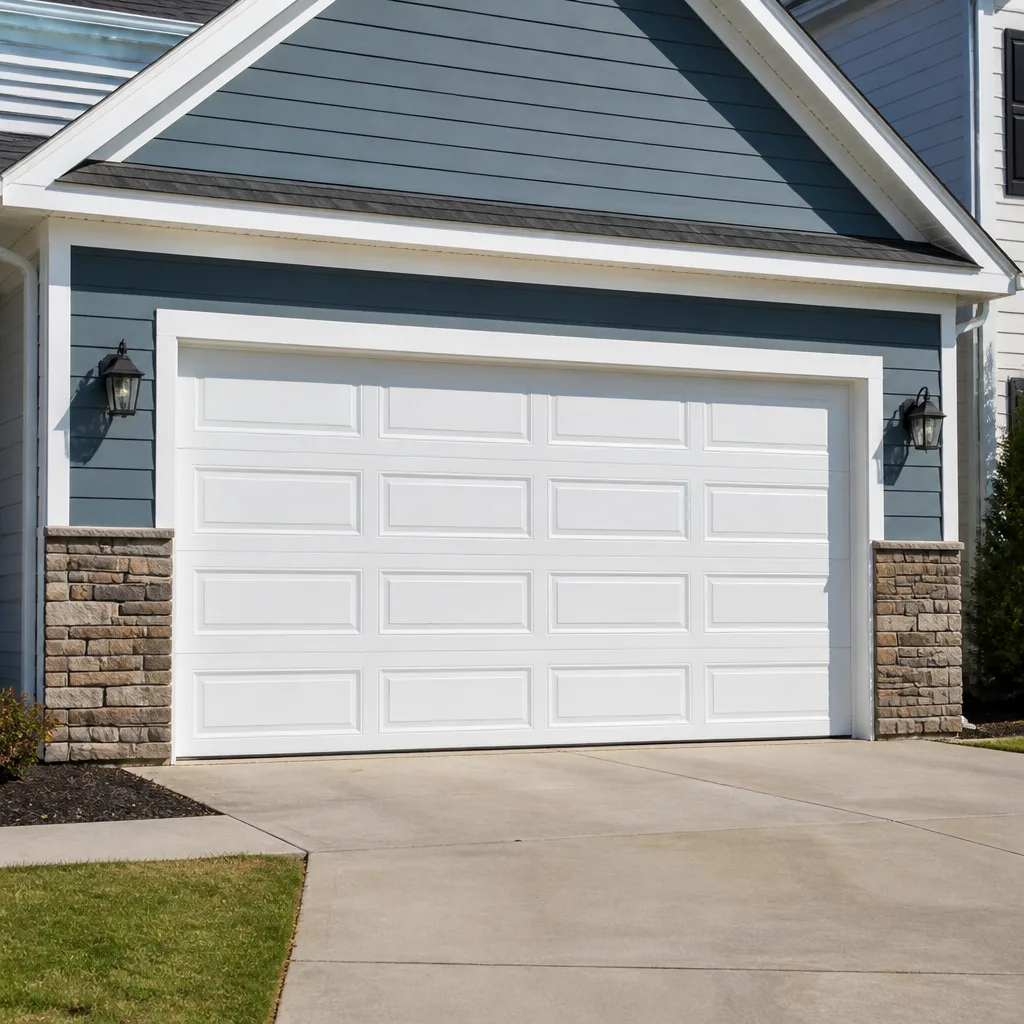 Raised-panel steel
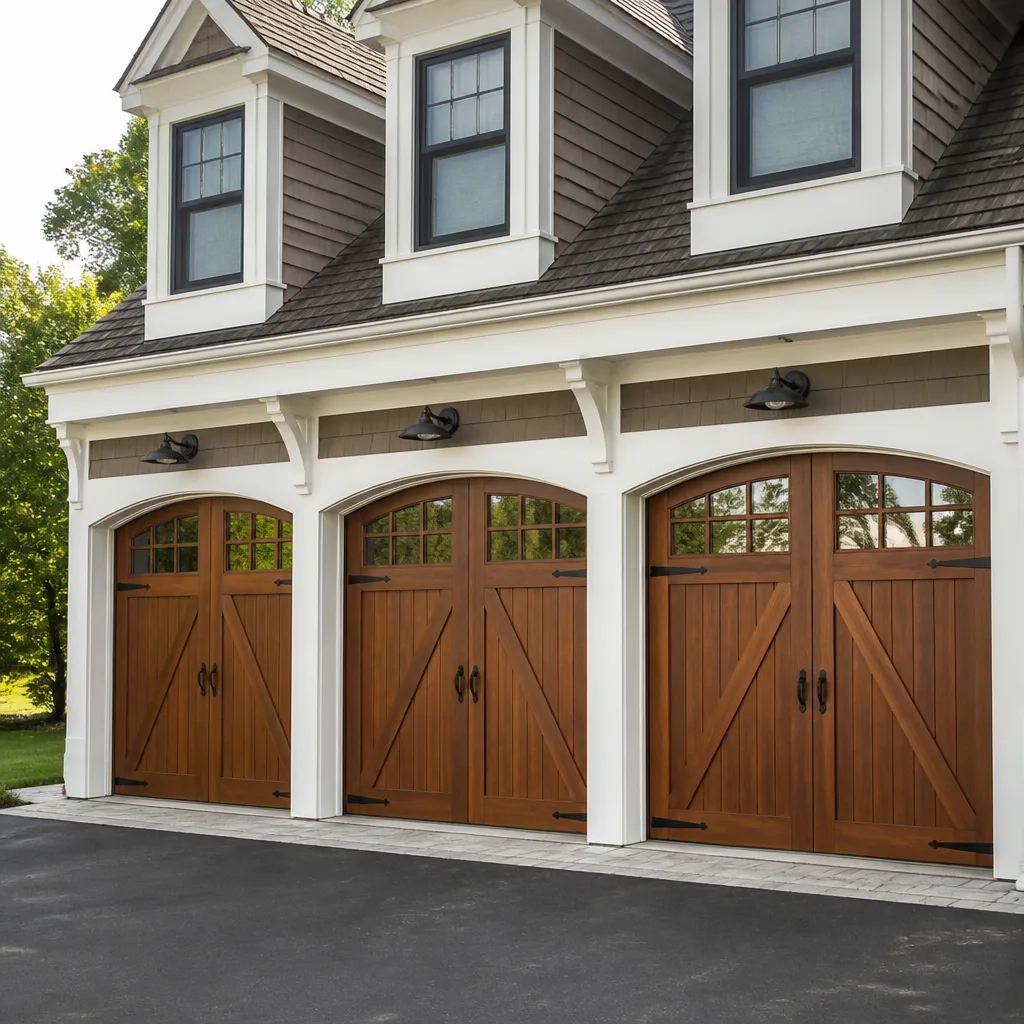 Carriage house
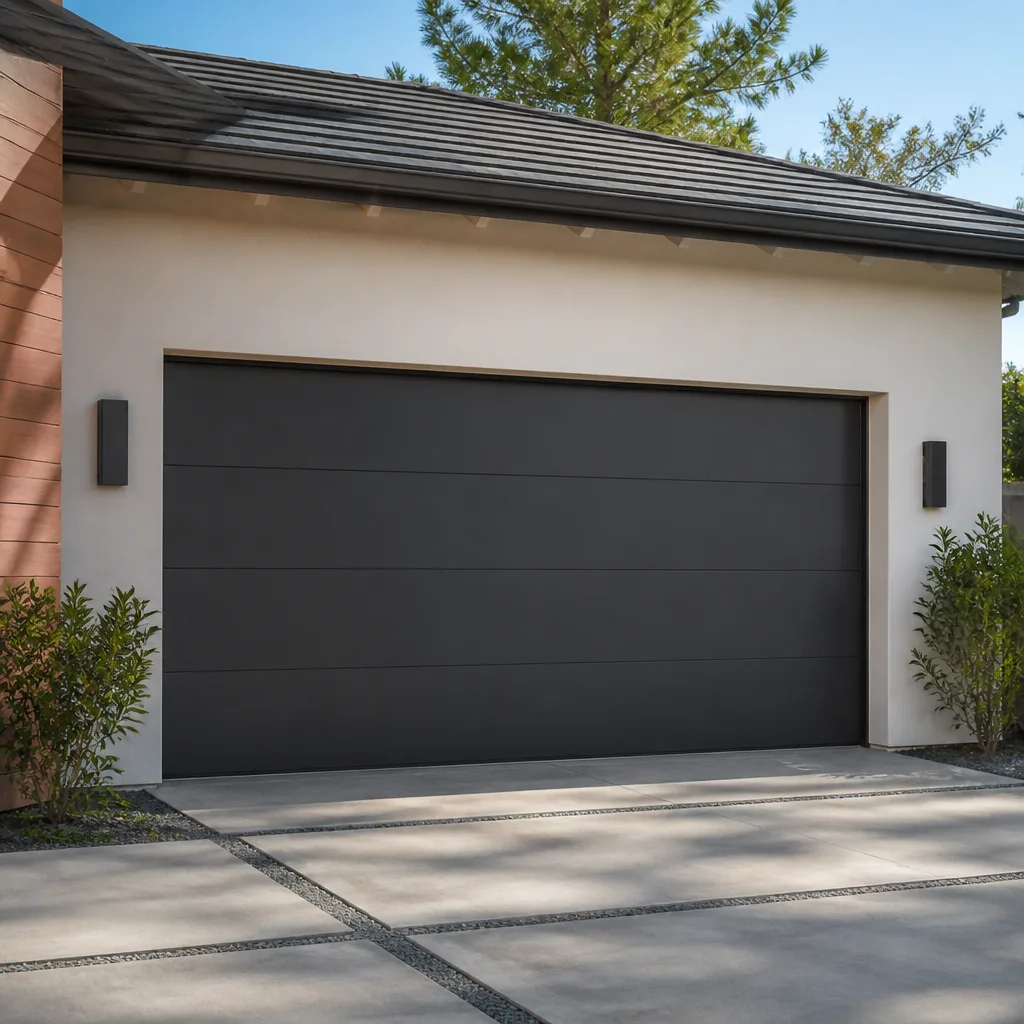 Modern flush
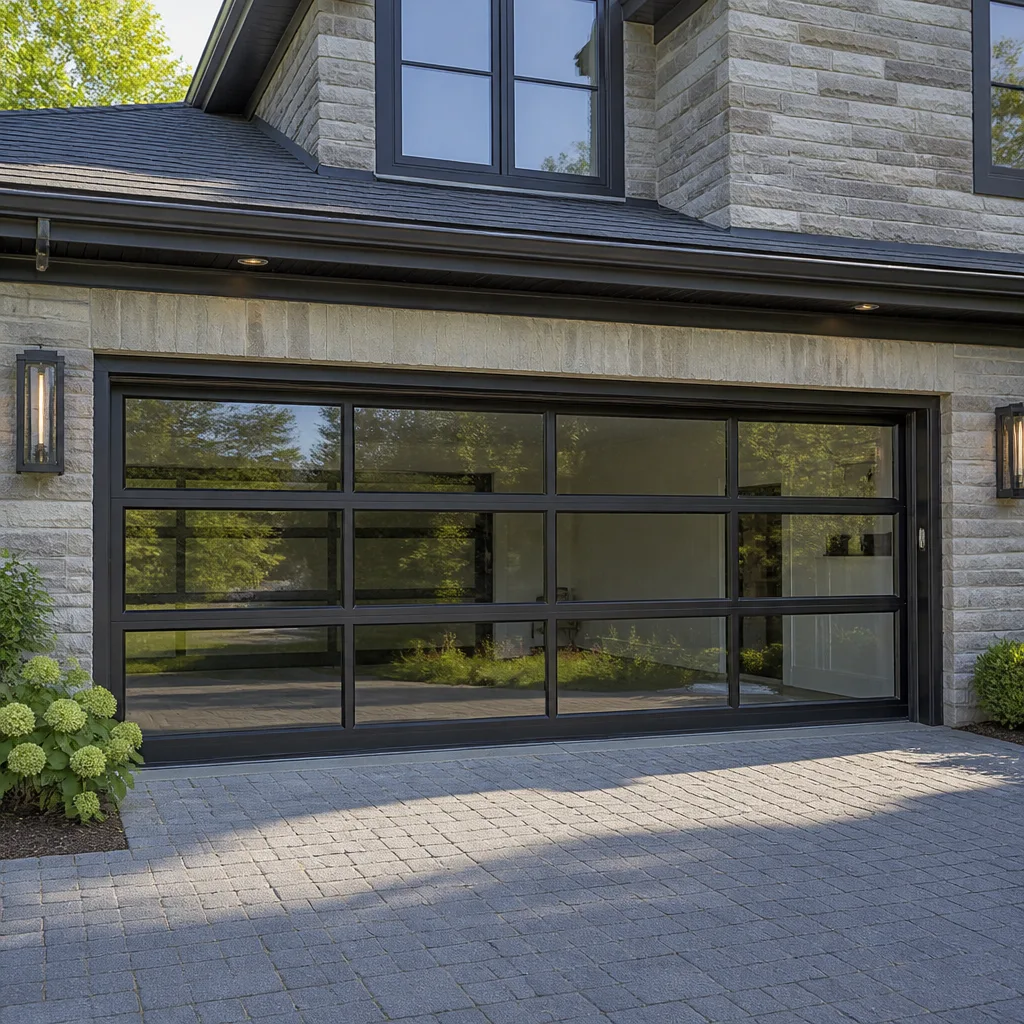 Full-view glass
 LiftMaster openers
 Chamberlain openers
Full 25-point door and opener safety check with every visit - springs, cables, rollers, tracks, and your LiftMaster or Chamberlain opener included
You get a price before we start. It does not change when the pro arrives.
Get your free estimateGarage Door Permits, Codes & Inspections in Lakewood, NJ: What You Need to Know
You can swap a single bent panel without ever calling the building department. Replace the entire door on an attached garage and skip the permit, though, and you may run into a problem when you sell the house. That gap between “nobody told me” and “this needs a sign-off” is where most Lakewood homeowners get stuck. The rules aren’t hidden – they’re just scattered between the state code, Ocean County practice, and how Lakewood Township actually processes a permit. In this guide we’ll draw the line between the work that needs a permit and the work that doesn’t, explain what happens if you skip it, and walk through what an inspection actually looks like if you go through the process.
Quick Answer
In New Jersey, a like-for-like garage door replacement normally doesn’t need a permit, but a new door installation or any structural change to the opening does. Anything touching the frame, header, or the fire-rated wall between an attached garage and the living space is a construction permit job under the state’s Uniform Construction Code, administered locally by Lakewood Township. When in doubt, one call to the township building department settles it in a few minutes.
Styles & brands we work with
- Raised-panel steel
- Carriage house
- Modern flush
- Full-view glass
- LiftMaster openers
- Chamberlain openers
Table of Contents
- Where New Jersey Draws the Line on Garage Door Permits
- What’s State Code and What’s Decided in Lakewood
- How Unpermitted Work Shows Up When You Sell
- Fire Rating for Doors Between the Garage and Living Space
- What Happens During a Garage Door Inspection
- What Fails, and Why
- How Lakewood Weather Affects Doors and Hardware
- What a Homeowner Should Check Before Calling Anyone
Where New Jersey Draws the Line on Garage Door Permits
The single most useful rule of thumb for Lakewood is this: if the door is going back where a door already was, on the same tracks, no new framing, no new opening, you’re almost certainly in repair territory. If you’re cutting, reframing, enlarging, or installing a door where one didn’t exist, that’s construction, and construction is where permits live.
New Jersey’s Uniform Construction Code is the framework behind this. It’s a state-level set of rules that every municipality, Lakewood included, is required to enforce through its own construction office. The code separates work into categories: building, electrical, plumbing, fire, and so on. A garage door replacement sits in building, and the deciding factors are whether the work affects the structure or the fire separation between the garage and the house.
Here’s how it usually breaks down:
- Same-size door swap on existing tracks: usually repair, usually no permit.
- Door plus new torsion spring and opener on existing hardware: usually repair, usually no permit.
- New door where there was none (converting a wall opening): permit, structural review.
- Enlarging or narrowing the opening, replacing the header, reframing: permit, always.
- New construction or a garage addition: part of the main building permit.
- Replacing the door between the garage and the house: a permit is often required because it’s a fire-rated assembly, and this is where homeowners get surprised.
Panel swaps, roller replacement, cable replacement, spring replacement, opener swaps – these are repairs, and in Lakewood we’ve never seen the township require a permit for them. Structural change is different. When a job crosses from “replace” to “modify,” the township wants to see paperwork. If you’re unsure which side of that line your job falls on, a quick call to the Lakewood Township building department is free and usually answered within a few minutes during their normal hours.
What’s State Code and What’s Decided in Lakewood
Homeowners often ask whether they need to deal with Trenton, Ocean County, or Lakewood Township. In practice it’s the township – the state writes the code, the county handles some subdivision and site work, and the municipal construction office issues and inspects permits for residential work inside the town.
Understanding the split helps:
The state level (NJ Uniform Construction Code)
The state sets the substantive rules. It defines what counts as construction, what the fire separation between a garage and a house has to look like, what inspections are required, and the general standard any door or opener installation has to meet. It also sets the license classifications for the contractors who do the work.
The Ocean County level
Ocean County operations mostly touch on planning, site plan, and road issues. Garage door work in a residential subdivision almost never reaches the county stage. But if the work were part of a larger project that includes site changes – a major addition, a change in impervious coverage – the county’s involvement can come into play. For a door or opener by itself, you’re dealing with the township.
The Lakewood Township level
Lakewood’s construction office administers the UCC locally. They issue permits, schedule inspections, and sign off. Their requirements around submission (what drawings, what forms, how quickly they can schedule) are what actually determine how a project flows. It’s worth asking them directly how far in advance to file, because that’s a scheduling question specific to the town on a given week, and no general guide can predict it for you.
Where people go wrong is assuming a rule that applies to commercial work also applies to a house. Commercial fire doors and overhead doors may have additional requirements under the building code subcode, but a residential garage door in Lakewood operates under the residential rules. If your property is mixed-use or has a commercial garage, ask the township before you assume the residential rules apply.
How Unpermitted Work Shows Up When You Sell
New Jersey is what’s called an attorney-review state: most residential sales go through a real estate attorney, not a title company alone. That review often pulls a municipal open-permits report, sometimes called a code or permit history, from Lakewood Township. If a permit was pulled and never closed out, it shows up. If a permit was never pulled for work that required one, it may show up as a gap in the record – the door isn’t in the file, but nothing says it was added, so a careful attorney will ask.
Three things can happen:
- The sale proceeds normally. Most of the time this is the outcome. A door swap is minor work and often slips through. That’s not the same as saying it’s fine; it’s saying it’s often unnoticed.
- You’re asked to cure it before closing. The buyer’s attorney asks for documentation. You may need to pull a permit retroactively, pay the township’s fee, and have the work inspected. This stretches the closing timeline, and in Lakewood’s current market – where buyers are competing and timelines matter – a delay of even a couple of weeks can cost a seller leverage.
- The sale falls apart. This is the rare, worst case. If a fire-rated assembly between the garage and the house can’t be verified, some buyers walk. It’s uncommon, but it happens.
What we tell homeowners is simple: keep the paperwork. Even when no permit was required, keep the manufacturer’s spec sheet for the door, the opener paperwork, and the name of who did the work. If a question ever comes up, that file answers it faster than a phone call to a township office that might not remember the job. And if you’re selling, look at your door carefully before the listing photos go up. A clean, properly installed door is a selling point. A door that looks like it might have been a weekend project invites questions nobody enjoys answering at the closing table.
If you’re organizing repair records before a sale, the cleanest path is to have any current issue fixed first. Our page on garage door repair covers what a repair visit usually addresses, and the technician can note the work in writing.
Fire Rating for Doors Between the Garage and Living Space
This is the part of the code most Lakewood homeowners have never heard of, and it’s the one that matters most. The door between an attached garage and the house is a fire separation. It exists because a garage is where cars, fuel, lawn equipment, and paint live, and a fire that starts there can spread into the living space fast. New Jersey code requires that separation, and it requires a specific kind of door assembly – one that’s designed and labeled to resist fire for a set period.
What that means in practice:
- A hollow-core or standard interior door is not a valid garage-to-house door, full stop.
- The frame, the weatherstripping, and the self-closing hardware are part of the assembly and have to meet the same standard.
- Replacing a garage-to-house door with the wrong product is a code violation even if nobody ever inspects it.
- If the assembly is altered – for example, cutting a pet door through it, changing the hardware, or replacing it with a lighter door – the fire separation is compromised.
This is where we use our depth. A garage door specialist deals with fire-rated assemblies often enough to know the difference between a proper labeled product and something that looks close but isn’t. If you’re considering a replacement on that particular door, it’s worth asking the township what documentation they want before the door goes in, not after. That’s a code question first and a product question second.
This also sits next to the work most homeowners don’t want to touch: springs and cables. Those carry real stored force, and a mistake can seriously injure someone. If a fire-rated door or its opener needs any spring work as part of the job, that’s a call to a trained technician, not a weekend project. Our page on garage door spring repair explains what a safe repair looks like and what gets checked when the assembly is opened up.
What Happens During a Garage Door Inspection
When a permit is required and issued, the township schedules an inspection. The inspector isn’t there to grade your installation for style. They’re there to verify that the work meets the permit’s scope and the code’s requirements. In most Lakewood cases the inspection is quick – fifteen to thirty minutes is typical – and it happens once, unless something fails.
Here’s the usual sequence:
- Permit filed and issued. Your contractor submits the application with the scope of work and any required drawings. The township reviews and issues the permit.
- Installation completed. The work is done to the code and to the permit’s scope. No substitutions that change the scope.
- Inspection scheduled. The township sets a date. In some cases the inspection is rough-in during installation, and in others it’s a final inspection after completion. It depends on what the permit covers.
- Inspector on site. They verify the door size and type, the structural attachments, the fire separation if it applies, the opener if it’s part of the scope, and the safety features.
- Approval or a written correction list. If the work passes, the permit is signed off. If not, the inspector issues a list of what needs to change, and you schedule a re-inspection once it’s fixed.
What the inspector looks at in a residential garage door context:
- The header and framing – whether the door is supported the way the permit describes.
- The attachment points and whether any structural modification is properly done.
- The door’s labeling, especially if it’s a fire-rated interior door between the garage and the house.
- Safety features on the opener – the force-reverse and the photo-eye system, which are required by the code regardless of brand.
- Whether the work matches the scope of the permit, without additions or changes.
The inspection isn’t about the brand. A LiftMaster opener and a system from another leading brand both have to meet the same safety requirements. That’s why a technician who works on your specific brand is a real advantage: they know what a compliant installation for that system looks like and can flag anything that would cause an inspector to write a correction.
What Fails, and Why
Most garage door inspections pass. The failures that do happen fall into a handful of patterns, and knowing them in advance saves a re-inspection.
The most common failure is a scope mismatch. The permit says one door, and a different door gets installed – different size, different material, different rating. Even if the door that went in is better than what was permitted, the inspector can’t sign off on a scope that doesn’t match the paperwork. The fix is to file an amendment before the work, not after.
The second most common is a fire-rating problem on the garage-to-house door. Either the wrong door was installed, or the assembly wasn’t completed – the self-closing hardware wasn’t installed, the weatherstripping was left out, or the frame wasn’t rebuilt to spec. Any of these is a fail.
The third is attachment. A door that’s mounted to framing that wasn’t built for it, or where the header has been modified without an engineer’s involvement, gets flagged. This is uncommon on a straight replacement but common on a job where someone opened up the original framing to fit a larger door.
The fourth is opener safety features. The photo-eye sensors have to be operating, and the opener has to reverse on contact with an obstruction. Technicians check this on every visit because it’s a code requirement – and because a doorway that doesn’t reverse can injure a child or a pet. If your opener is older or has never been serviced, that’s a reason to look at it before scheduling anything else. Our page on garage door opener repair covers the checks in more detail.
How Lakewood Weather Affects Doors and Hardware
Lakewood sits inland in Ocean County, and the local climate is genuinely a factor in garage door condition. Summer humidity is real here – the kind that keeps a garage damp for weeks – and winter brings freeze-thaw cycling that finds every gap in a weather seal. Over a few seasons, a door that was tight starts to sag or bind.
What that looks like on a door-by-door basis:
- Wood and wood-composite doors tend to swell in July and August and dry in the fall. Paint film that’s intact on the outside may be compromised on the inside face, which is the side most homeowners never look at.
- Steel doors hold up better, but the bottom section takes the brunt of standing moisture from the driveway, and that’s where rust shows first.
- Aluminum doors with a full-panel or flush design can develop corrosion at the fasteners, which starts small and becomes visible over time.
- Torsion springs work harder when the door is out of balance, and out-of-balance is a common side effect of a door that’s swollen or dried unevenly. A spring that fails because of it isn’t a manufacturing problem, it’s a maintenance one.
- Opener gearing and belts work against more resistance in the summer humidity than in the cold, which shows up as a door that runs slow or doesn’t close all the way on the hottest days.
None of that changes the permit question – climate doesn’t trigger permits. But it changes how often Lakewood homeowners need to think about their door. A Wayne Dalton or a Raynor or a Craftsman door that’s had a gentle climate and a light cycle will last longer than one that’s been fighting its own weatherstripping. Keeping the bottom seal intact and the springs properly balanced is cheap compared to a door that has to come out.
What a Homeowner Should Check Before Calling Anyone
There’s a short list of things any homeowner can look at without touching a tool, and it answers a lot of the questions that come up before a repair call. We share these because a well-informed customer asks better questions.
- Look at the door from the outside, in the daylight. Is the bottom seal touching the ground, or is there daylight under it?
- Look at the tracks. They should be straight and level. A dent or a bend means the door is running against resistance.
- Listen to the door when it runs. A rhythmic clunk or a grinding sound usually points to a roller or a hinge, not the opener.
- Look at the springs once, from a safe distance. A gap in the coil, a sagging spring, or a visible break means the door needs to come down carefully. Do not attempt to test, adjust, or touch the springs. That’s the most dangerous part of any garage door system, and it’s where people get hurt.
- Test the safety reverse on the opener. Put a small piece of wood or a brick under the door and press the close button. The door should reverse on contact. If it doesn’t, that’s a code issue and a safety issue.
- Check the photo-eye sensors. Both sensors should have a steady light and the door should stop and reverse if you block them. If the light flickers or the door doesn’t respond, the sensors need attention.
Everything on that list is diagnostic. None of it is a green light to work on the springs or the cables yourself. If you find a spring at the top of that list, the answer is a call – no exceptions. Safety aside, that’s the part of the trade where the highest-skilled technicians earn their keep, and it’s why a dedicated spring service matters.
Common Mistakes to Avoid
- Assuming “replacement” always means no permit. A door swap on existing tracks is usually repair. A door that’s new to that opening, or one that changes the framing, is not. The township is the one who decides, not the door manufacturer’s marketing.
- Replacing the garage-to-house door with any interior door. The fire separation between an attached garage and living space is a code requirement in New Jersey regardless of whether a permit was pulled. A standard interior door doesn’t meet the standard, and it’s a safety issue before it’s a paperwork issue.
- Filing a permit and then substituting the door. Inspectors work from the permit, not from what looks best in the driveway. Changing the door without amending the permit typically results in a correction.
- Skipping the paperwork to save time, then selling. Township open-permit records come up in a Lakewood sale. A missing permit is usually fixable, but it stretches the closing timeline when buyers are competing.
- Letting a contractor handle the permit without knowing what was filed. Ask what the permit covers and confirm it matches the work. If the contractor can’t or won’t tell you, that’s a reason to look elsewhere.
- Trusting a generalist to know the local code. A handyman who does a little of everything may do a fine job on the installation and still not know what Lakewood Township wants to see on the permit. A garage door specialist does, because they deal with it constantly.
- Ignoring the opener safety features. Photo-eye and force-reverse failures show up at inspection and in real life. They’re not optional features; they’re required.
See the difference
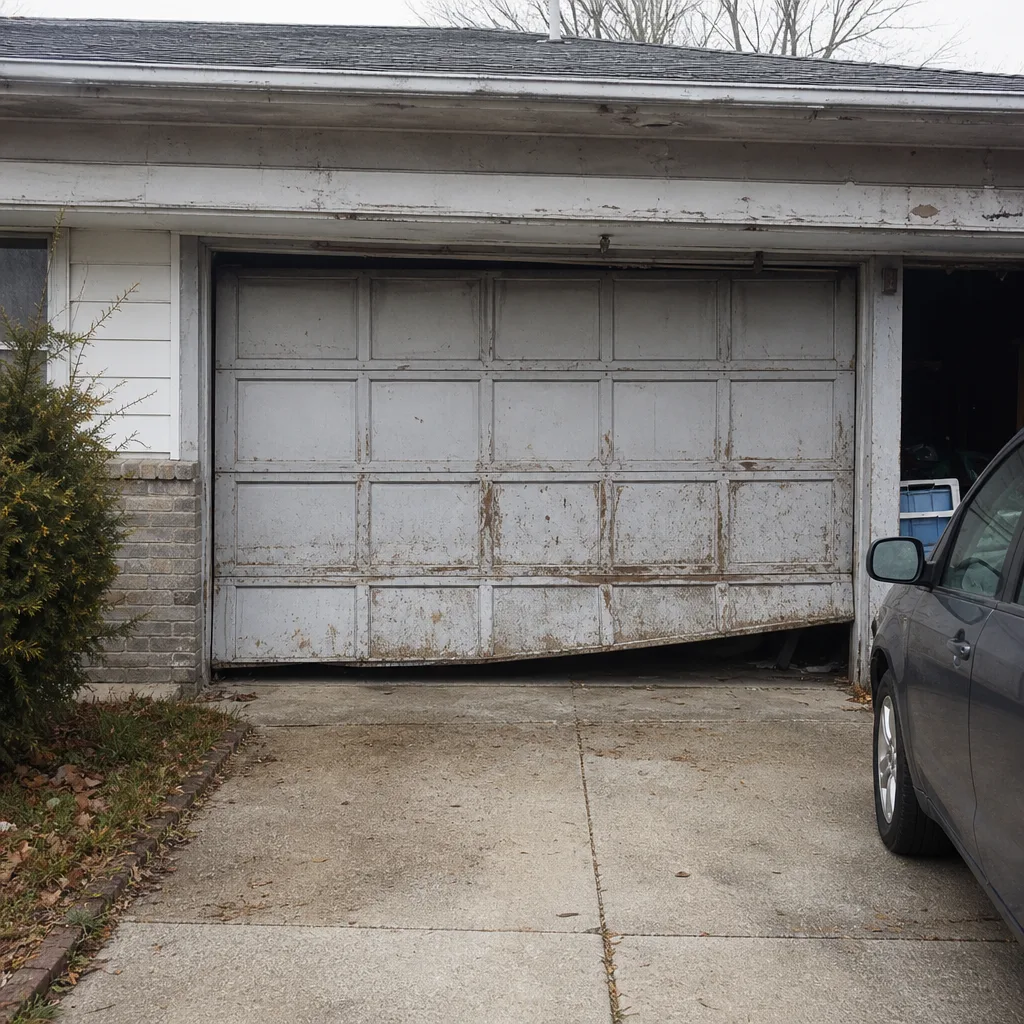 Before
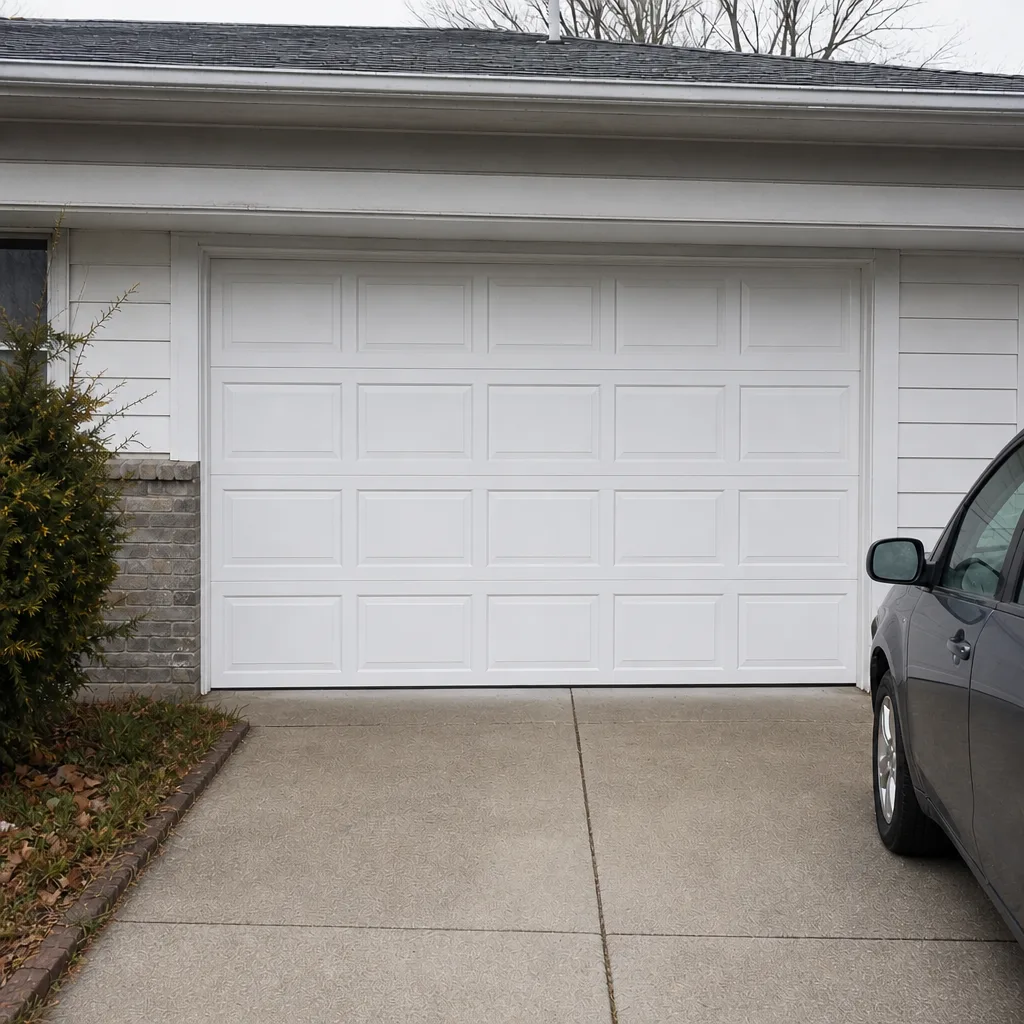 After
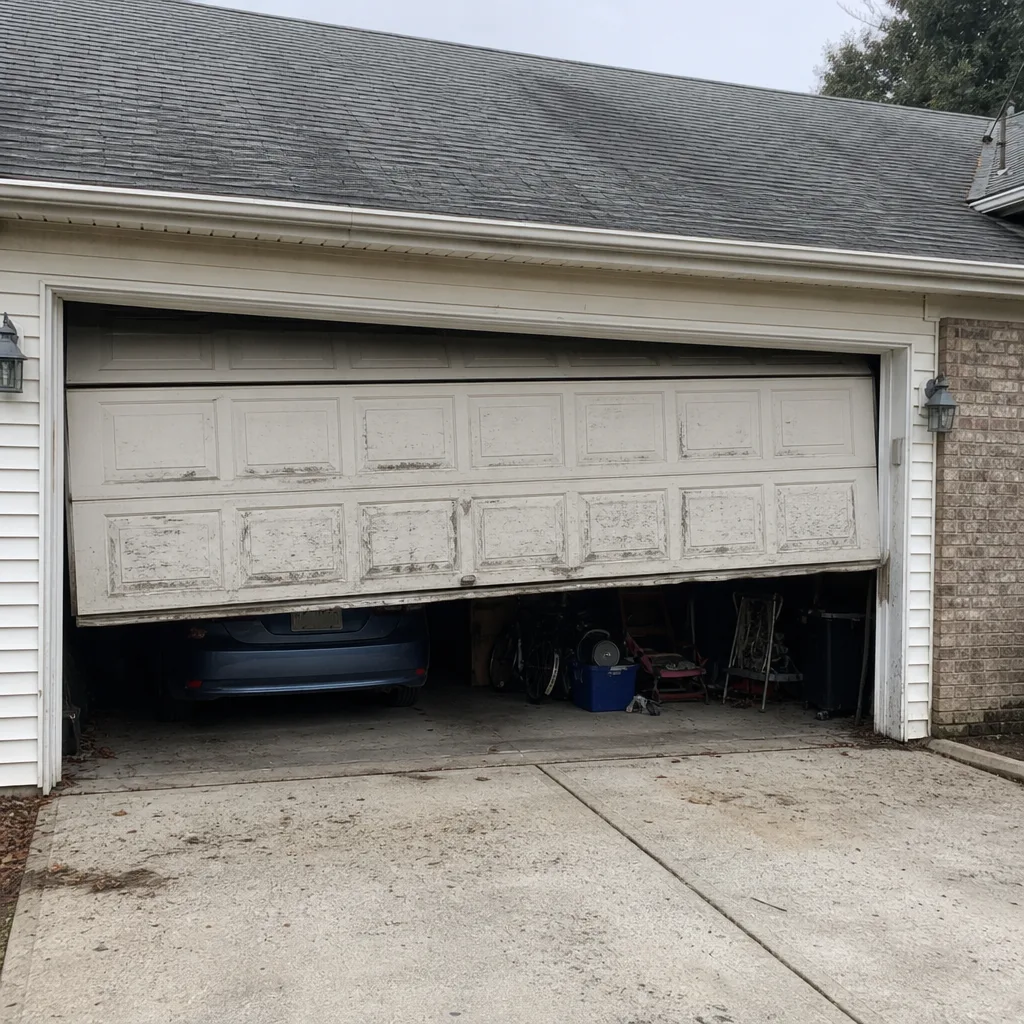 Before
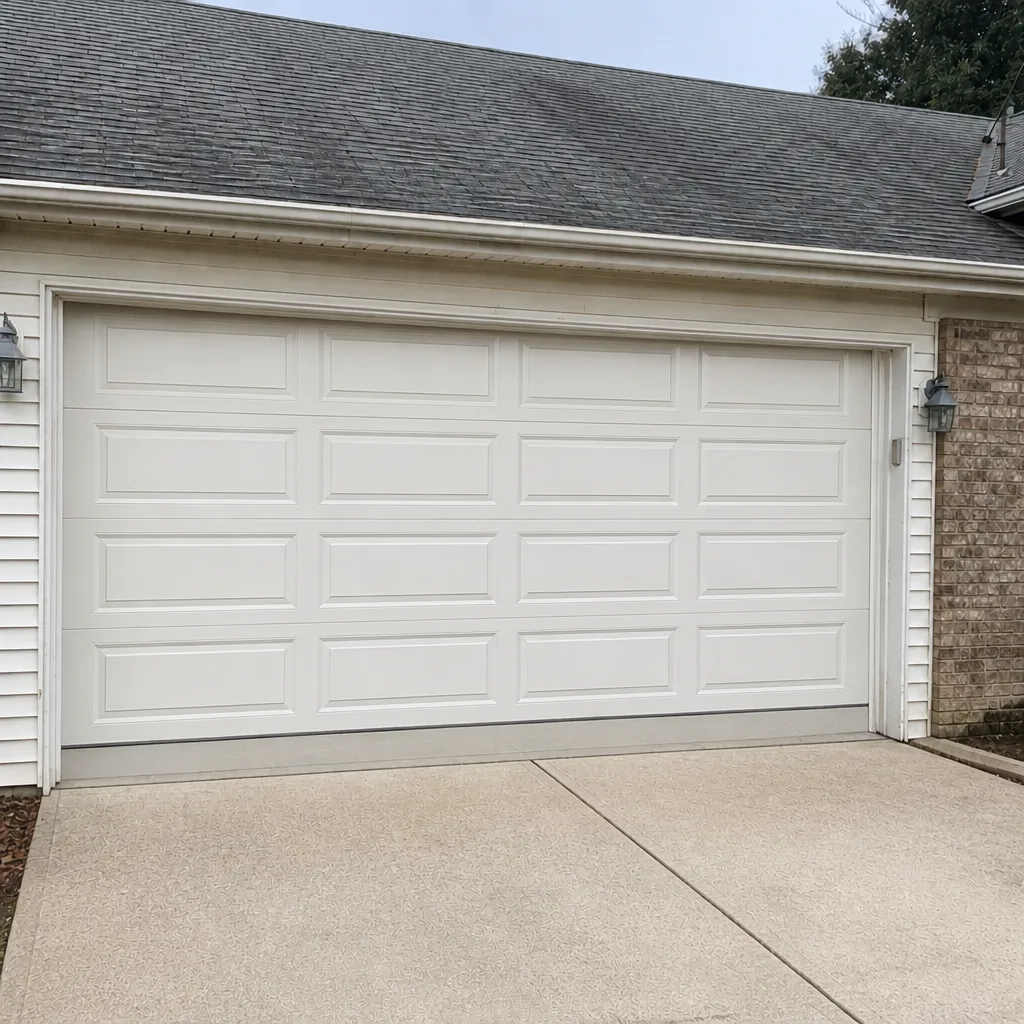 After
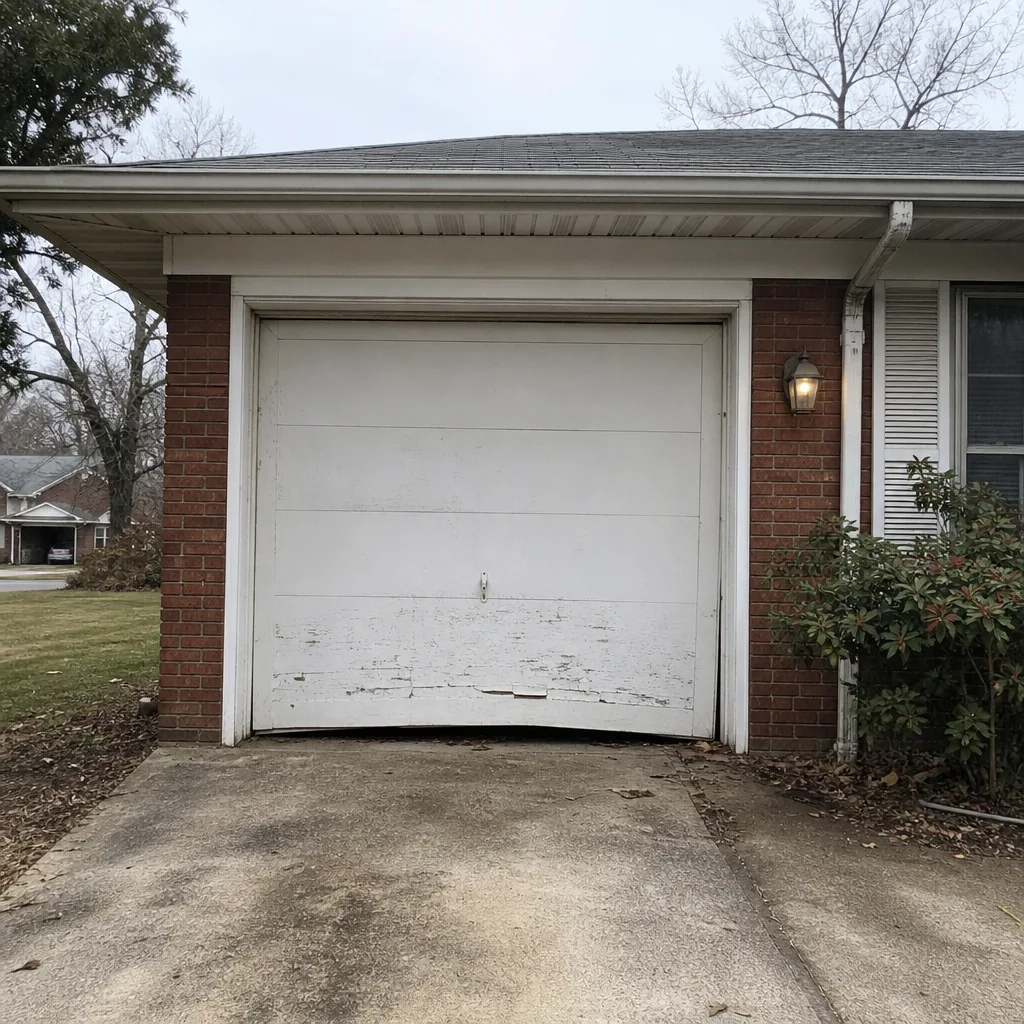 Before
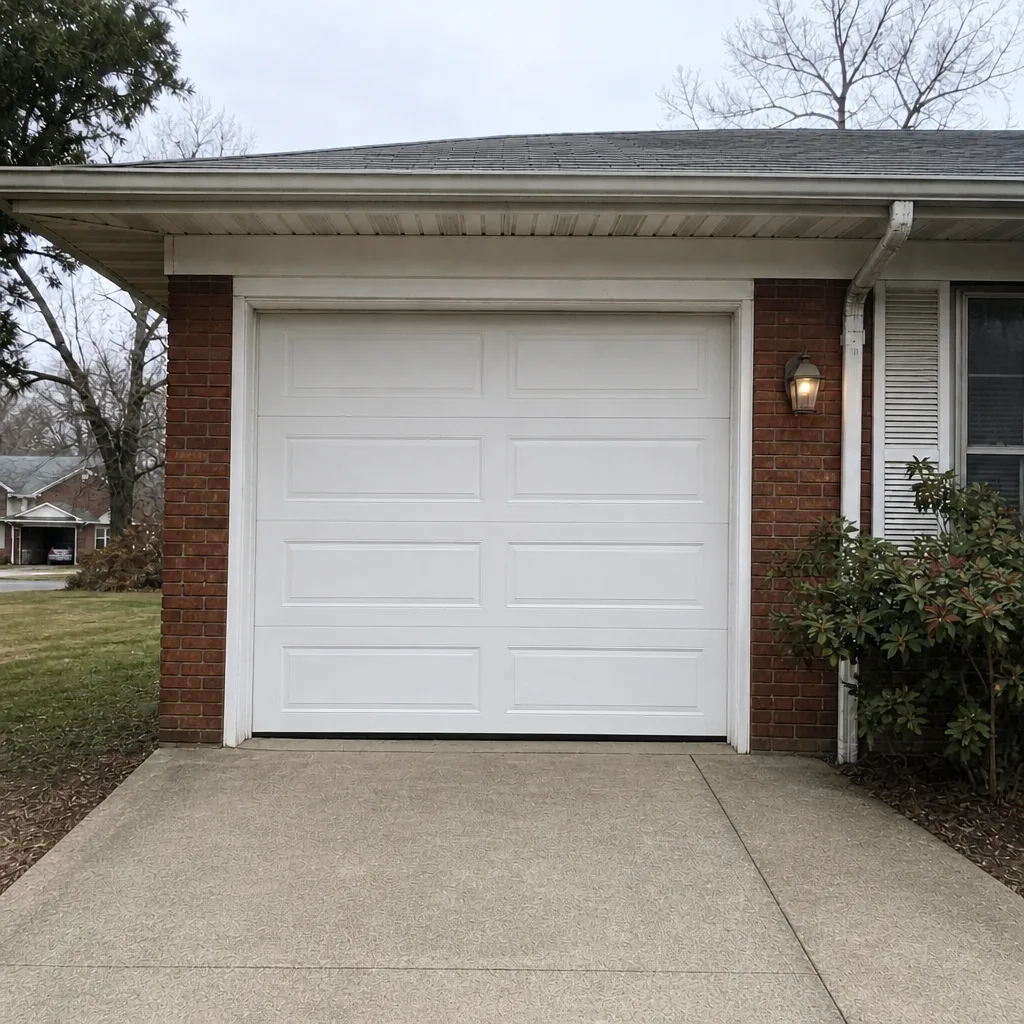 After
When to Call a Professional
The work that almost always warrants a professional is predictable: springs, cables, and anything involving the structural framing around the opening. A broken torsion spring stores enough energy to cause serious injury, and the failure mode is unforgiving. If a spring has snapped, if a cable is hanging loose, or if the door is sagging off the tracks, that’s a call before anything else. Similarly, if a door has to come out for a fire-rated replacement, the permitting and documentation piece is where a specialist earns their keep – they know what the township wants and how to file it.
For openers, brand matters less than whether your technician knows the system. LiftMaster, Chamberlain, Genie, Clopay, Amarr, Wayne Dalton, Craftsman, and Raynor all have their own diagnostic paths, and the person on your door should already know yours. At Eldridge Garage Door Repair we work on all of them, so you’re not sending someone to figure out your brand on the job. We offer free estimates in Lakewood – call (888) 287-5235. We answer 24/7. Fast dispatch from 7am to 7pm, Sunday through Friday.
Frequently Asked Questions
Often no, but not always. A like-for-like replacement of a door on existing tracks, with no structural change and no change to the fire separation, is typically treated as repair and doesn’t require a permit. A new installation, a change in opening size, framing modification, or a replacement of the fire-rated door between an attached garage and the living space will normally require a permit under New Jersey’s Uniform Construction Code. The fastest way to be sure is a call to the Lakewood Township construction office; they’ll tell you for your specific job. If the door needs work as part of the project, call (888) 287-5235 for a free estimate.
Usually no. Replacing an opener on an existing door is normally a repair, and the construction office generally doesn’t require a permit for it. What does matter is that the new opener meets the code’s safety requirements, which are the photo-eye sensors and the force-reverse function. Those are required regardless of the permit status. If you’re unsure about your own door or opener, we can look at it and tell you honestly what it needs – call (888) 287-5235 for a free estimate.
It depends on what the township records show when a sale goes through. In most cases the sale proceeds, but the buyer’s attorney will often ask for documentation, and a permit that was never filed can come up. If it does, you may be asked to pull the permit retroactively, have the work inspected, and close it out. This stretches the closing timeline and in a competitive Lakewood market that delay can matter. If the fire separation between the garage and the living space is the issue, it can be more serious, up to and including the buyer walking away. Call (888) 287-5235 if you want the door itself checked before a listing goes live.
Yes. The door between an attached garage and the living space is a required fire separation under New Jersey code, and it has to be a rated assembly. That means a specific type of door, installed with the correct self-closing hardware and weatherstripping, not a standard interior door. If you’re replacing that door, talk to the township about what documentation they want before the door goes in. For the door and its assembly, call (888) 287-5235 for a free estimate.
It varies by township workload, so the most accurate answer is to ask the Lakewood Township construction office directly. For a straightforward residential door or opener installation, the review is usually quick once the application is filed correctly with the right scope and drawings. The inspection itself is typically scheduled shortly after the work is done, and a typical inspection runs fifteen to thirty minutes. If something needs correction, a re-inspection adds time. Call (888) 287-5235 for a free estimate on the door work itself.
The usual causes are a scope mismatch between the permit and what was installed, an incorrect or incomplete fire-rated assembly on a garage-to-house door, framing that wasn’t attached correctly, or opener safety features that don’t operate. All of these are avoidable with a proper installation and a clear permit scope. Our technicians have up to 8 years of experience with the major door and opener brands – Wayne Dalton, LiftMaster, Raynor, and the rest – so we know what an inspector wants to see. Call (888) 287-5235 for a free estimate in Lakewood.
The Bottom Line
The line on garage door permits in Lakewood is straightforward once you see it: repairs usually don’t need one, construction usually does. A like-for-like door swap on existing hardware, a spring repair, an opener replacement – those are repairs. A new door in a new opening, structural changes to the frame, or a fire-rated door between the garage and living space – those are construction, and the township wants to see the paperwork. If you’re unsure, one call to the township settles it, and it’s free. The bigger takeaway is that permits and fire ratings aren’t bureaucracy for their own sake. They’re how a garage door stays safe and how a sale moves forward without a snag.
When the door itself needs work – spring, opener, panel, or a full replacement – we work on your brand. From the first diagnostic through the written estimate, the price is quoted and agreed before any work starts, and we’d rather repair what you have than sell you a door you don’t need. Eldridge Garage Door Repair handles repair, opener diagnostics, spring service, and full installation across Lakewood, so one call covers it all, from the small fix today to a new door and opener system tomorrow. If it’s urgent, we’re here for that too: broken springs at night or a door that won’t close before work are the situations that can’t wait for a scheduled appointment, and we treat them that way. All of it comes down to knowing your system, not guessing at it.
Call (888) 287-5235 for a free estimate. We answer 24/7. Fast dispatch from 7am to 7pm, Sunday through Friday. Estimates are free, the price is set per job by the written estimate, and the work is quoted and agreed before it starts.
Written by the team at Eldridge Garage Door Repair.