
Last updated November 21, 2026
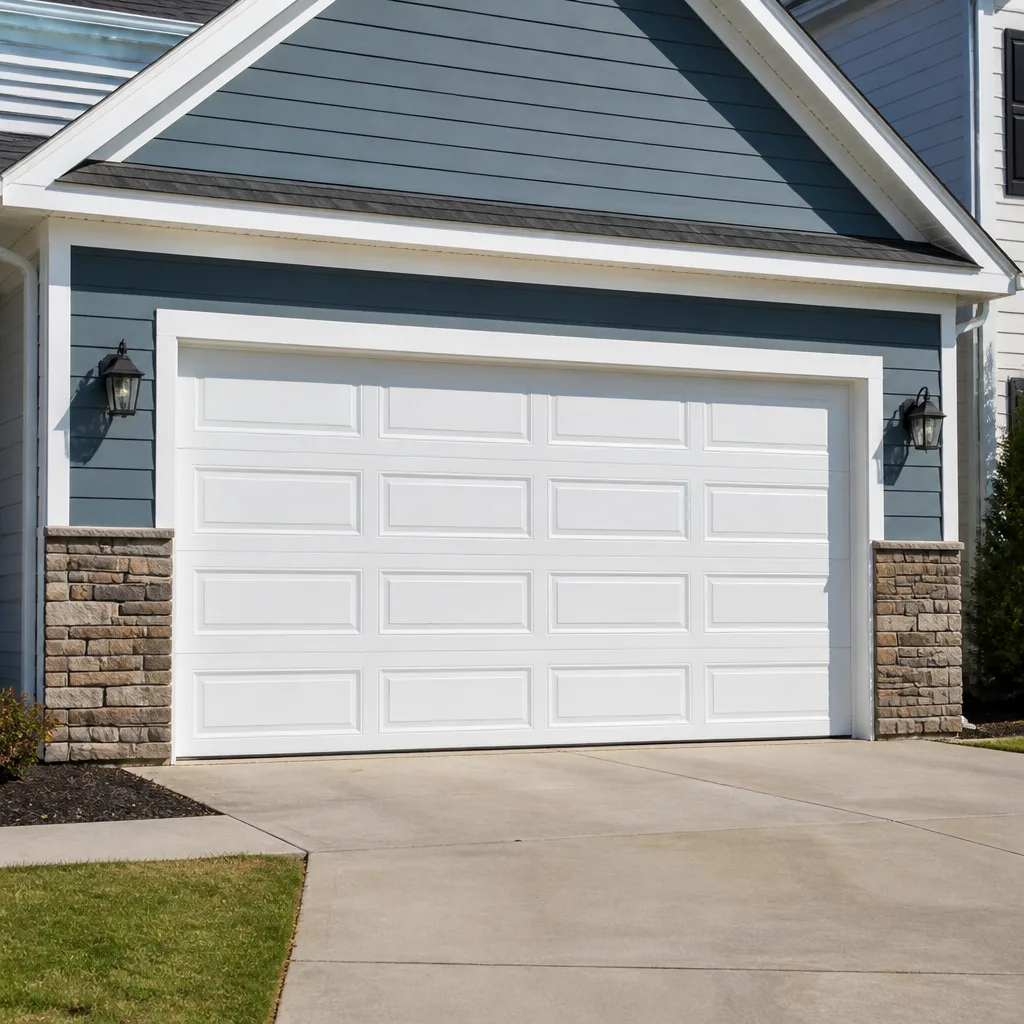 Raised-panel steel
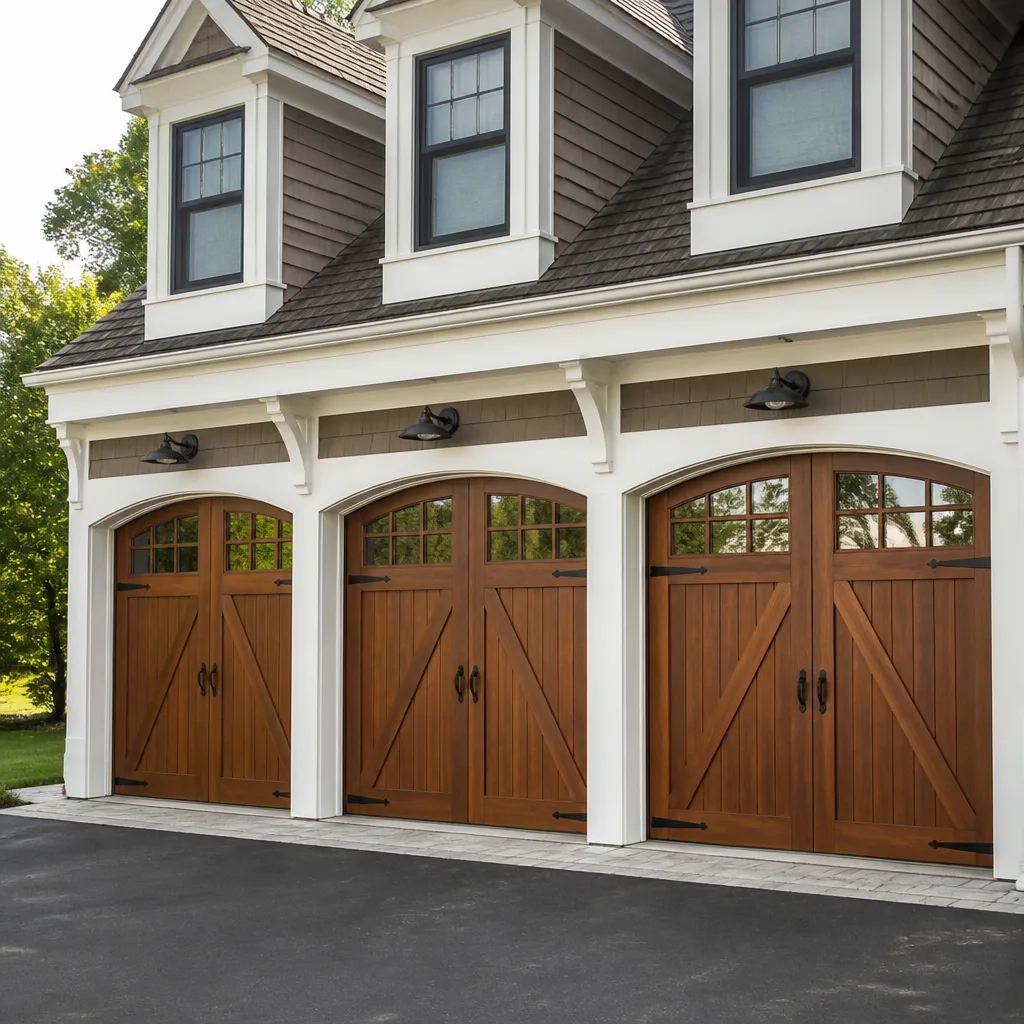 Carriage house
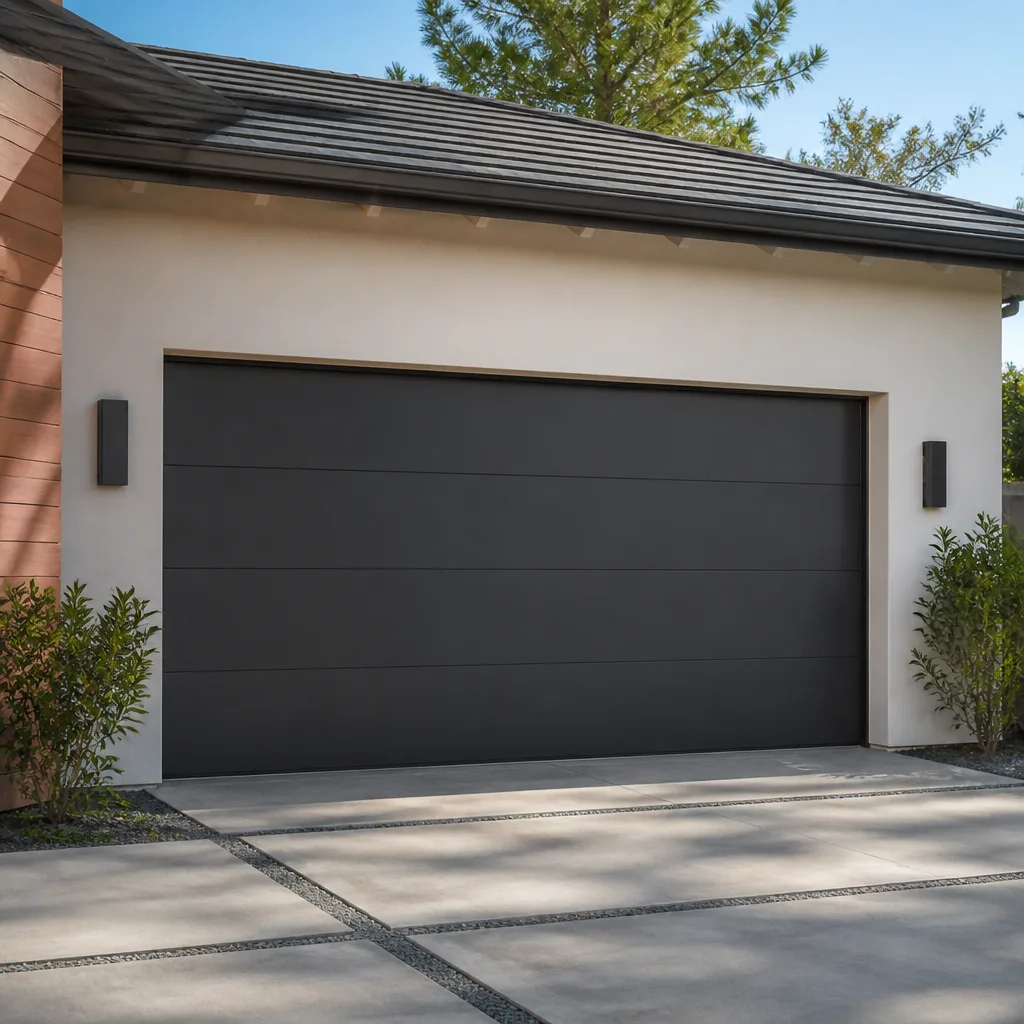 Modern flush
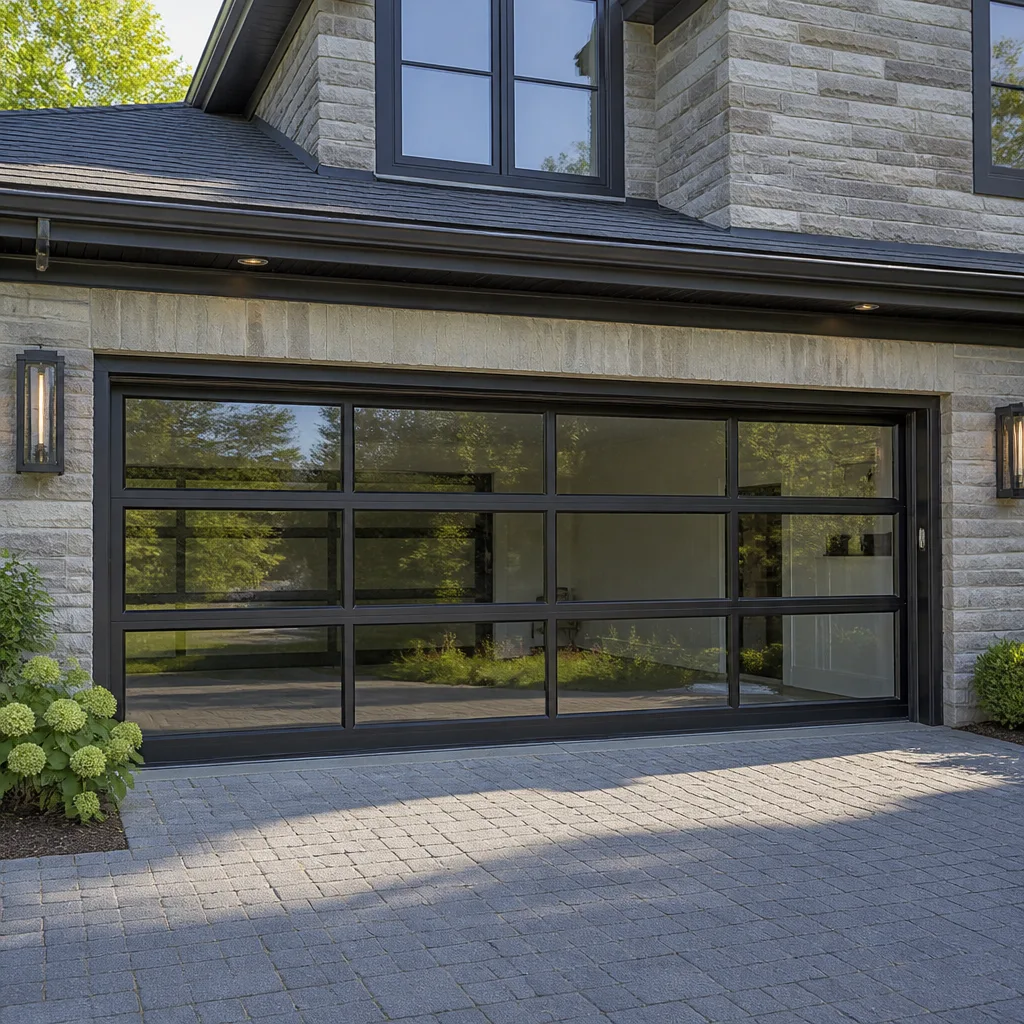 Full-view glass
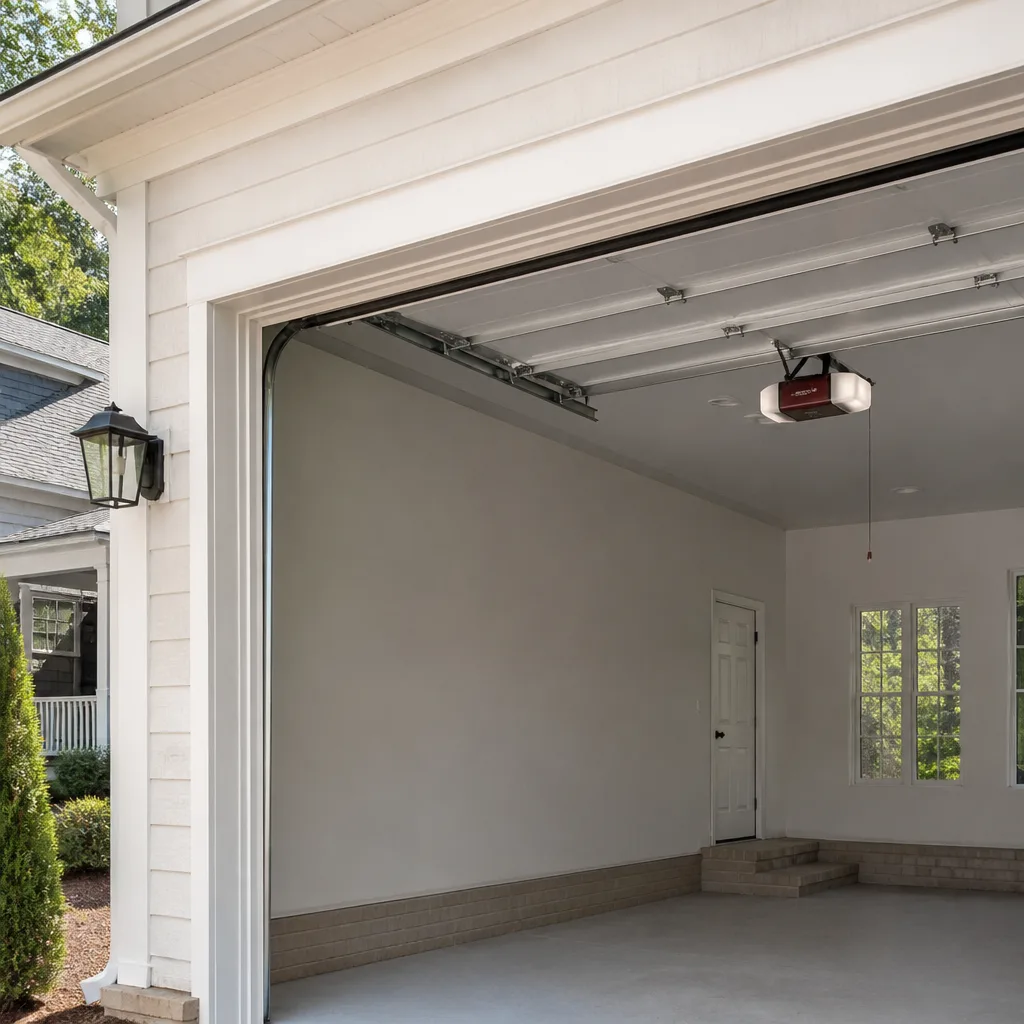 LiftMaster openers
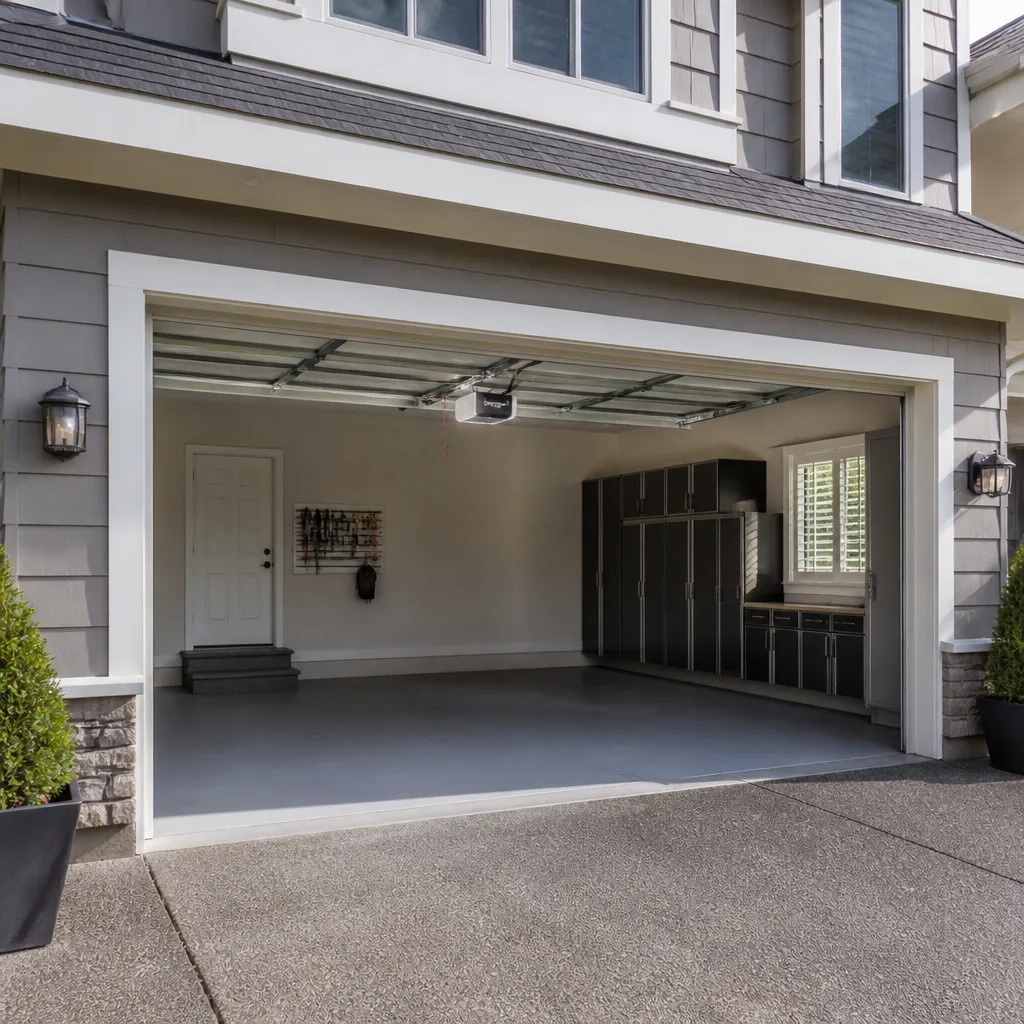 Chamberlain openers
Full 25-point door and opener safety check with every visit - springs, cables, rollers, tracks, and your LiftMaster or Chamberlain opener included
You get a price before we start. It does not change when the pro arrives.
Get your free estimateHow to Hire a Garage Door Contractor in Lakewood: A Step-by-Step Guide
Any contractor can say they work on garage doors. Ask them what type of spring your door uses and watch how long it takes them to answer. That pause, or the confident reply that follows it, tells you more than any glossy website ever will. Most Lakewood homeowners assume the hard part of hiring is checking a license box. It’s not. The hard part is telling a brand-fluent specialist apart from a generalist who plans to figure it out on your driveway, with your door, on your dime. This guide gives you the exact questions to ask, the answers that should disqualify someone, and the red flags hidden in low-ball quotes.
Quick Answer
To hire a garage door contractor in Lakewood, verify their New Jersey home improvement registration, ask five brand-specific diagnostic questions about your door and opener, and insist on a written quote that itemizes springs, cables, rollers, and labor separately. A contractor who can’t name your spring type, dodge the licensing question, or hands you a one-line price isn’t a specialist. The right hire answers those questions before you book, not after the door is apart.
Styles & brands we work with
- Raised-panel steel
- Carriage house
- Modern flush
- Full-view glass
- LiftMaster openers
- Chamberlain openers
Table of Contents
- What Licensing Does a Garage Door Contractor Need in Lakewood, NJ?
- How Do You Verify a Contractor in Under Two Minutes?
- What Five Questions Separate a Specialist From a Generalist?
- Why Is “Handyman” a Different Category From “Garage Door Specialist”?
- What Red Flags Hide in a Low-Ball Quote?
- How Do You Read Reviews Like a Skeptic?
- How Does Lakewood’s Climate Affect What You Should Ask?
- What’s the Step-by-Step Hiring Process?
What Licensing Does a Garage Door Contractor Need in Lakewood, NJ?
New Jersey requires home improvement contractors to register with the state Division of Consumer Affairs before they can legally take on residential work, and garage door installation and repair falls under that home improvement umbrella. That registration is your baseline, not a bonus. A contractor who performs residential garage door work in Lakewood should hold a valid New Jersey Home Improvement Contractor registration and be able to produce the number on request.
Registration is not the same as a trade license. New Jersey does not issue a garage-door-specific license the way it does for electricians or plumbers, so the registration is the main legal credential you can verify. What it confirms is that the contractor has met the state’s registration requirements and is on record. What it doesn’t confirm is whether they know a torsion spring from an extension spring, which is why the rest of this guide matters.
One detail trips people up: a contractor working under someone else’s registration, or a sole proprietor using a general liability policy that doesn’t cover subcontracted labor. When you ask for proof of registration and insurance, ask whose name is on each document. The name should match the company that will actually do the work.
- New Jersey Home Improvement Contractor registration – the core legal credential for residential garage door work.
- General liability insurance – protects your home if the door, tracks, or ceiling get damaged during the job.
- Workers’ compensation coverage – protects you if a helper gets hurt on your property.
- A written contract – New Jersey requires one for most home improvement jobs over a modest dollar threshold, so ask for it in writing rather than a verbal handshake.
For anything structural, like widening a header to fit a bigger door, local permitting may also come into play. Ask your contractor whether the specific job needs a permit from Lakewood’s building department, and let them explain the reasoning. A specialist knows the answer without guessing.
How Do You Verify a Contractor in Under Two Minutes?
New Jersey’s Division of Consumer Affairs maintains a public database where you can look up a contractor’s home improvement registration by name or number. The search takes seconds. What takes longer is asking the right follow-up questions once you’ve confirmed the registration is active.
- Open the state database. Search the company name or the registration number they gave you. Confirm the registration is active and matches the business you’re talking to, not a parent company or a subcontractor.
- Ask for a certificate of insurance. Request the general liability certificate and check that the coverage is current and lists the company’s legal name. If they say “we’re covered” without producing the paper, that’s a soft no.
- Confirm the phone number matches the listing. The contact number on their quote should be the same one on their website and their state registration. Mismatches are worth a direct question.
- Ask who will be on site. If a company sends a subcontracted crew, ask whether that crew is covered by the same insurance. In residential garage door work, a specialist typically sends its own trained technicians rather than flipping the job to whoever’s available.
- Get the estimate in writing. A written estimate with a company name, address, registration number, and itemized scope is the single most reliable signal that you’re dealing with a real operation.
In our experience, the contractors who resist the two-minute verification are the ones with something to hide. The ones who hand over their registration number before you ask are the ones you want to keep talking to.
What Five Questions Separate a Specialist From a Generalist?
The difference between a garage door specialist and a generalist isn’t just vocabulary. It’s how they diagnose. A specialist narrows a problem down by brand and system type. A generalist tries the most likely fix and hopes.
Ask these five questions before you book. Listen for answers that reference specific parts and brands, not vague reassurances.
- “What type of spring does my door use?” The two common types are torsion springs, mounted on a shaft above the door, and extension springs, mounted along the horizontal tracks. A specialist asks you to look at the door, or asks for a photo, and answers confidently. A generalist says “we’ll see when we get there.”
- “How do you diagnose an opener that runs but doesn’t lift the door?” The right answer separates the opener from the door itself: check the safety sensors, check the travel limits, check whether the springs are doing their job, and check the logic board. If the only answer is “we’ll replace the opener,” move on.
- “Which opener brands do you work on regularly?” A specialist covers the big residential brands, LiftMaster and Chamberlain among them, and can tell you how a LiftMaster wall-mount differs from a Chamberlain belt-drive in how it’s serviced. A generalist says “all of them” without any detail.
- “Do you repair springs, or only replace them?” Spring repair is one of the most technically dangerous jobs in the trade because the springs hold the door’s full weight under tension. A specialist will tell you replacement is the standard approach and explain why, and will also walk you through the safety setup. This is the moment to listen for a trained answer.
- “What happens if the door fails again after you leave?” Look for a warranty or a callback policy stated clearly. A specialist stands behind the repair. A generalist gives you a shrug or a phone number that doesn’t connect.
If you want a second layer of confidence, ask which specific brand components they install. A contractor who regularly installs Clopay panels, tracks, and hardware will answer with a model series. A contractor who orders “whatever’s in stock” won’t. For the door itself, that matters more than people expect, because panel styles and track dimensions vary by brand and a mismatched part shortens the life of the whole system.
Why Is “Handyman” a Different Category From “Garage Door Specialist”?
New Jersey treats home improvement contractors and handymen differently for a reason. A handyman can typically take on small, non-structural tasks. A home improvement contractor takes on projects that require registration, insurance, and a written contract. Garage door work straddles that line in ways that matter for your liability.
Here’s the practical difference. Garage door systems carry hundreds of pounds of tension in their springs and cables, and a door that’s misaligned can come off its tracks. If an unregistered or uninsured handyman gets hurt while working on your door, your homeowner’s policy may be the one that gets asked to cover it. If they damage the door or the track, getting the money back from a handyman with no insurance is a fight you probably won’t win.
The other issue is diagnostic. A handyman’s toolkit and training are general. Garage door diagnostics are specific: off-balance doors, worn rollers, bent tracks, stripped gears inside an opener. A specialist can tell you in a few minutes whether a problem is a $30 part or a whole-system replacement. A generalist often replaces the wrong thing first and charges you for the lesson.
- Liability: With a registered, insured contractor, the company’s insurance is on the hook if something goes wrong. With an unregistered handyman, you are.
- Contract: New Jersey requires a written contract for most home improvement work, and that contract protects you if the job goes sideways.
- Diagnosis: A specialist diagnoses the system. A generalist guesses at it.
- Parts: A specialist carries or sources brand-specific components for your exact door, not a universal part that almost fits.
- Safety: Garage door springs and cables are genuinely dangerous. A trained specialist treats them with respect, and that respect is one of the reasons you hired them.
This is the single-trade argument in a nutshell. A company that does garage doors and only garage doors has every reason to get the diagnosis right the first time. A generalist has every reason to move on to the next job.
What Red Flags Hide in a Low-Ball Quote?
A quote that’s dramatically lower than the others isn’t a bargain. It’s usually a quote with items missing, and those missing items reappear on the final invoice. Learning to read the line items is the difference between a fair price and a surprise.
Here’s what a real quote for a typical repair should itemize, and what the missing line means:
- Springs: A spring price is for one spring. A matched pair is usually replaced together, so a pair costs roughly twice the single-spring price. If the quote lists a pair but charges one-spring money, ask what’s actually being replaced.
- Cables: When springs are replaced, the cables often need replacing too. A quote that omits cables isn’t saving you money; it’s saving them a line item until the cables fail.
- Rollers and hinges: Quiet operation and smooth travel depend on the rollers. A cheap quote often leaves them out and adds them when the door still sounds rough after the fix.
- Labor and disposal: Old springs and panels have to go somewhere. If disposal isn’t listed, expect it to appear at the end.
- Opener parts: If the opener is part of the job, look for gear, logic board, and travel-limit items separately. A flat “opener repair” price with no parts listed is a red flag.
- Permit costs: Where a permit applies, a good quote states it. If the contractor says “we don’t need permits,” ask why.
The other red flag is the push toward replacement before diagnosis. If a contractor looks at your door for two minutes and recommends a new one, ask what specifically failed. A specialist can point to the part. A salesperson points to the door.
For a baseline, ask what a typical spring replacement or opener repair costs before you commit. A fair contractor will walk you through a range, explain what moves the price up or down, and then put the final number in writing. That written number is the one that counts. Our team can walk you through the likely ranges for garage door repair before a technician arrives, so you’re not guessing at the invoice.
How Do You Read Reviews Like a Skeptic?
Reviews are useful, but not in the way most people read them. The star average is the least informative part. What matters is the pattern of the text: who wrote it, what details they included, and whether the timing looks natural.
Fake or incentivized reviews tend to follow recognizable patterns:
- Identical phrasing across multiple reviews. “Fast, friendly, and professional” repeated word for word by five different accounts is a template, not a coincidence.
- A sudden burst of reviews with no detail. Real reviews mention specifics: a broken spring above the door, an opener that wouldn’t close, a technician who diagnosed the problem in minutes. Vague reviews posted on the same day are worth discounting.
- Five stars for a job that isn’t in the reviewer’s history. If the reviewer’s other activity is dozens of five-star reviews for unrelated businesses in different cities, treat the review with caution.
- Reviews that read like a sales pitch. Genuine reviews describe a problem and how it was solved. Promotional language is a sign someone was asked to write it.
What to look for instead is consistency over time. A garage door specialist with a real customer base will have reviews spread across months, mention specific brands and jobs, and occasionally include a three- or four-star review that the owner responded to thoughtfully. A thoughtful response to criticism is a better signal than a wall of perfect scores.
For a Lakewood-specific read, check whether reviews mention the town, the type of job, and the technician’s diagnosis. Reviews that cite a particular opener brand, a specific fix, or a clear explanation of the quote are the ones doing you a favor. Use them the way you’d use a neighbor’s recommendation: for pattern, not perfection.
How Does Lakewood’s Climate Affect What You Should Ask?
Lakewood’s summers are humid and its winters bring freeze-and-thaw cycles, and both put stress on garage door systems in ways homeowners don’t always connect to a contractor’s knowledge. Ask a contractor how they handle seasonal wear and you’ll learn whether they’ve actually worked in this climate or just memorized a script.
Humidity is the quieter factor. Wood composite panels and metal doors with painted finishes can absorb moisture or blister over multiple humid summers, especially on a south-facing facade. Winter freeze-thaw is harder on the mechanics: lubricant thickens in cold snaps, rollers stiffen, and a door that ran smoothly in October can sound rough by January. A specialist will recommend lubrication with the right product for the season and note when a roller or hinge is past its best.
Snow accumulation is another factor to ask about. When snow piles against the bottom seal and the door has to be forced up, the opener and springs take a beat of extra strain. A contractor who knows the local pattern will talk about seal condition, bottom bracket health, and how the door’s balance changes after a cold spell. That’s the kind of answer that separates someone who reads a manual from someone who has actually worked on Lakewood doors.
Ask directly: “What do you see most often on doors around here this time of year?” A specialist answers with specifics about humidity, cold snaps, and the hardware that suffers. A generalist answers with a generic list. The right answer is also a good moment to bring up the specific parts on your own door and what condition they’re in.
What’s the Step-by-Step Hiring Process?
Putting it together, here’s the sequence. It takes less time than you think, and it filters out most of the contractors you’d rather not hire.
- Describe the problem in detail when you call. “The door opens a few inches and stops” is a diagnostic clue. “The door is broken” isn’t. The more specific you are, the faster a specialist can tell you what’s likely going on and whether it’s urgent.
- Ask for the registration number and insurance certificate. Verify the registration in the state database. Confirm the insurance certificate names the company that will do the work.
- Ask the five diagnostic questions. Spring type, opener diagnosis, brand familiarity, spring repair approach, and warranty. Listen for specifics.
- Request a written, itemized estimate. Make sure it includes the parts, the labor, and any permit costs. Compare like with like against other quotes.
- Confirm who will be on site and when. Get the appointment window in writing. Ask whether the technician will call before arriving.
- Confirm the safety setup before work begins. A specialist will check the door balance and the safety reverse before and after the repair. Ask them to show you the test when they’re done.
- Keep the paperwork. The written contract, the estimate, and the warranty terms are your protection if anything goes wrong later.
If the job involves the opener itself, the questions change slightly. Ask whether the opener is repairable or whether the gears or logic board are the issue. A specialist will tell you the difference between a travel-limit adjustment and a full unit replacement, and won’t sell you a new opener for a setting that needed a screwdriver. That’s the same principle behind our garage door opener repair work: diagnose first, replace only what’s actually failed.
Common Mistakes to Avoid
- Hiring on price alone. A quote that’s significantly lower than the others is usually missing line items that reappear later. Compare scope, not just the bottom number.
- Skipping the state registration check. It takes two minutes, and it’s the one piece of paper that tells you a contractor is on record with New Jersey. If the registration number doesn’t match the company, walk away.
- Letting a generalist touch the springs. Springs and cables are under serious tension and are genuinely dangerous to work on. A trained specialist treats them as a safety-critical job; a generalist treats them as a stubborn bolt.
- Accepting a verbal quote. New Jersey requires a written contract for most home improvement work, and the written estimate is your protection. If they won’t put it in writing, they’re not the hire.
- Believing the review average instead of reading the reviews. Star ratings can be gamed. Patterns in the text, spread over time, are harder to fake.
- Replacing the door when the opener was the problem. Get a diagnosis with a reason attached. If the contractor can’t explain which part failed, get a second opinion.
- Forgetting to ask about the warranty. A fair contractor will tell you what happens if the same problem returns. If the answer is a shrug, that’s your answer.
The common thread is a single idea: the questions you ask before the job starts determine the quality of the job. A contractor who welcomes them is a contractor you can trust with your door.
See the difference
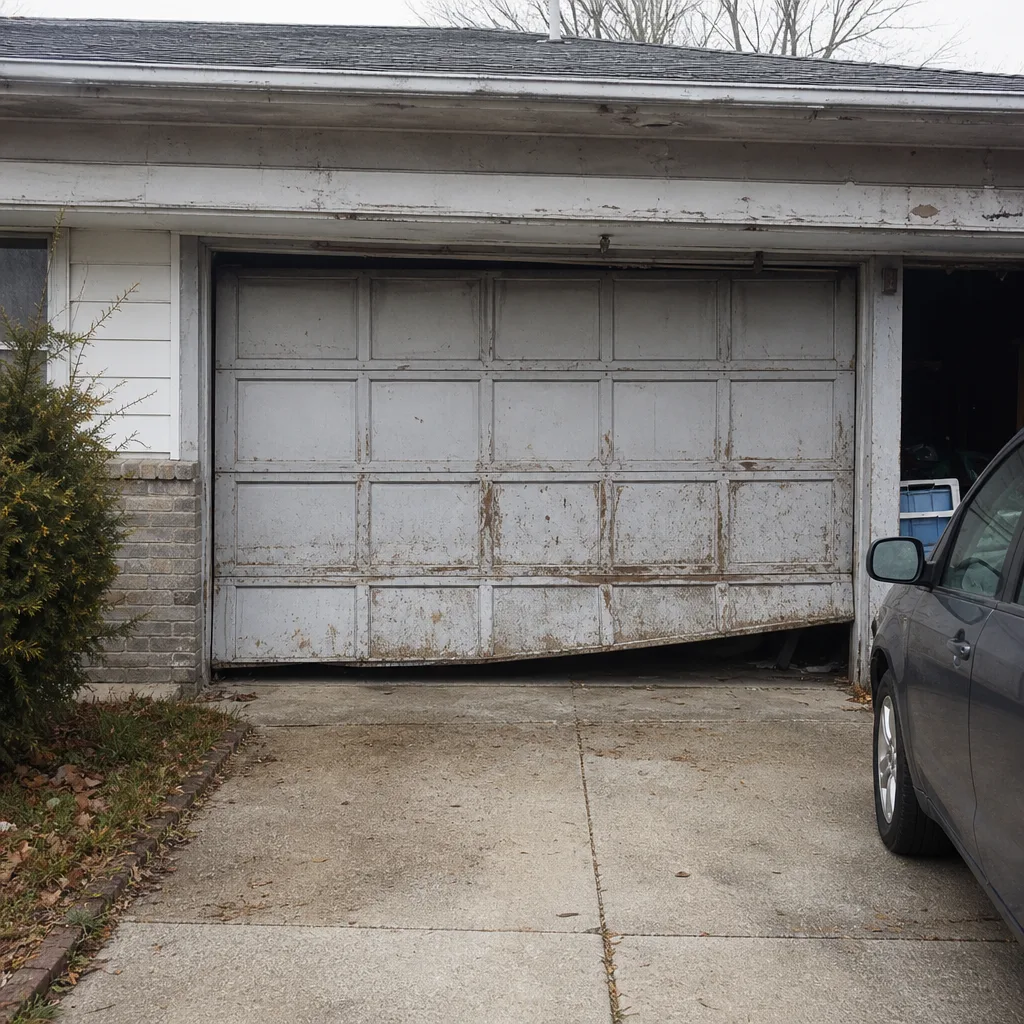 Before
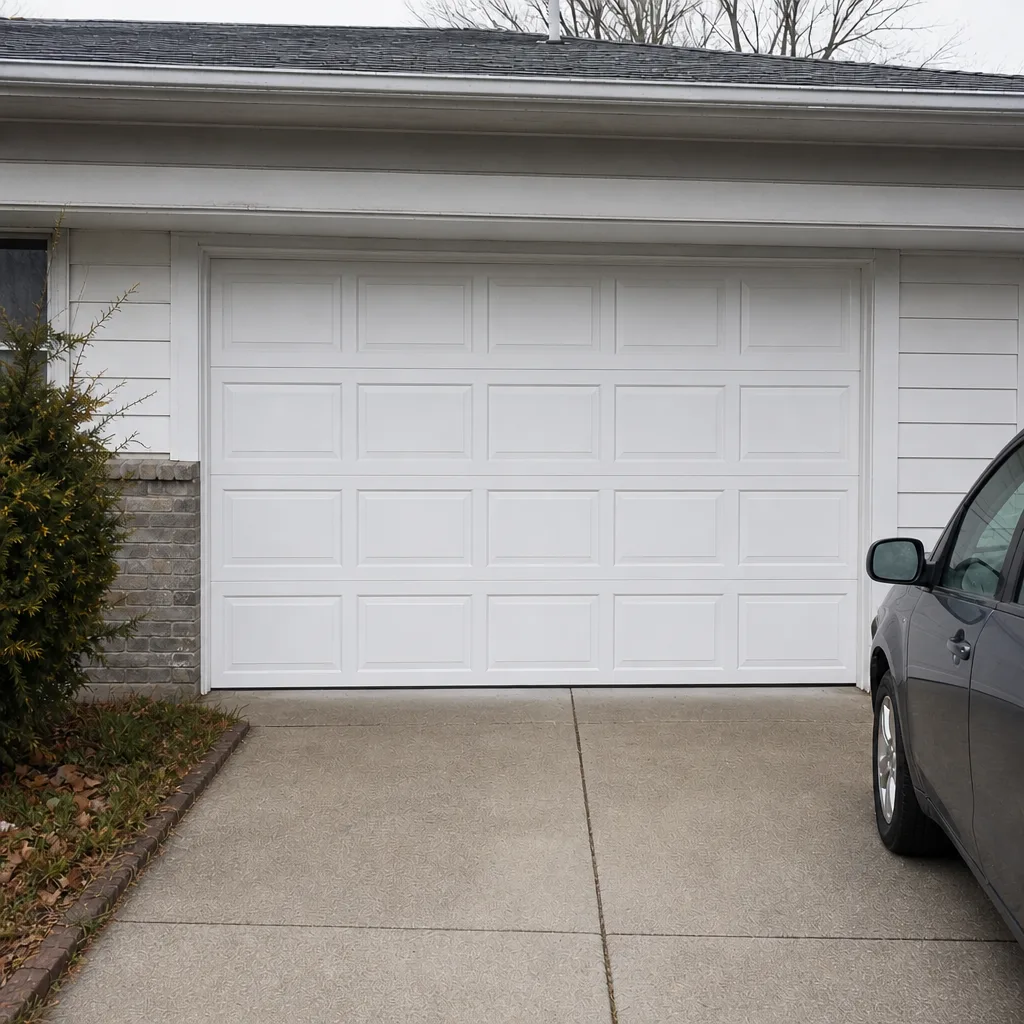 After
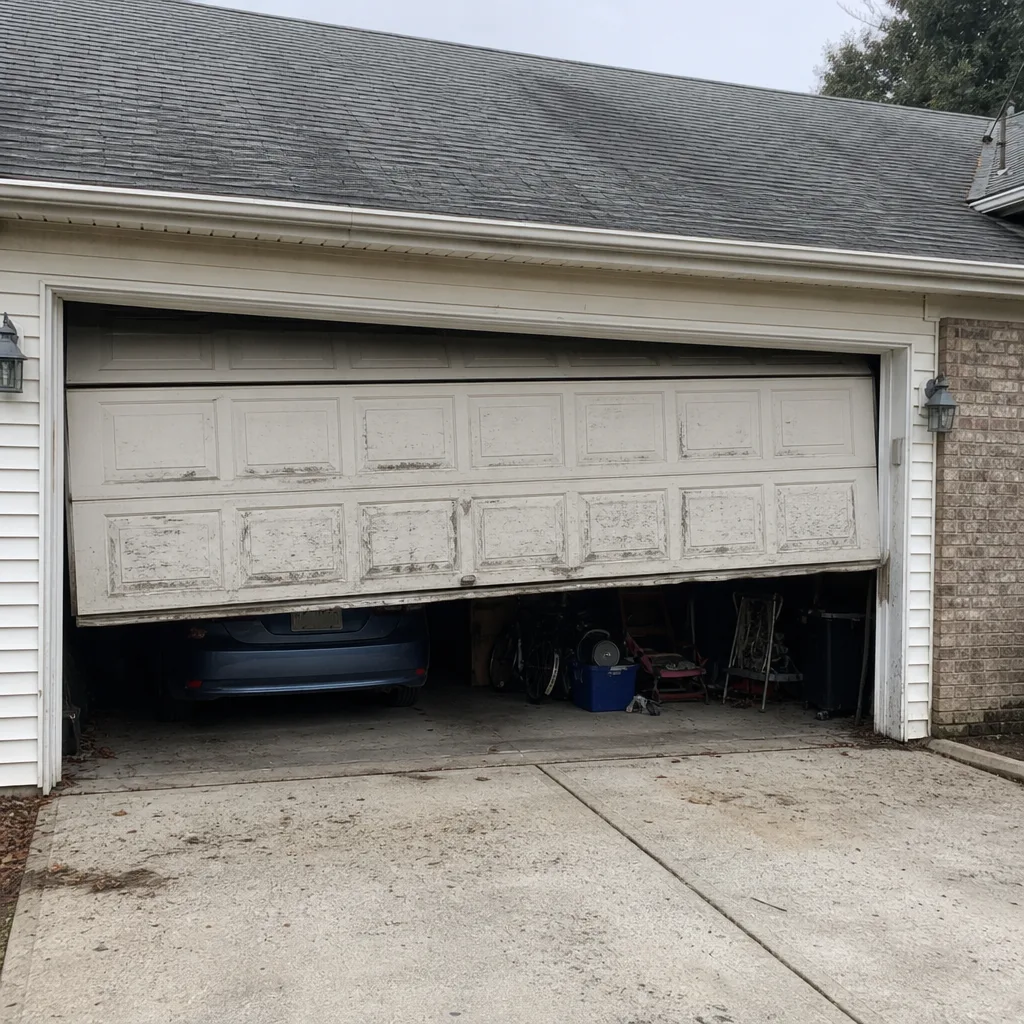 Before
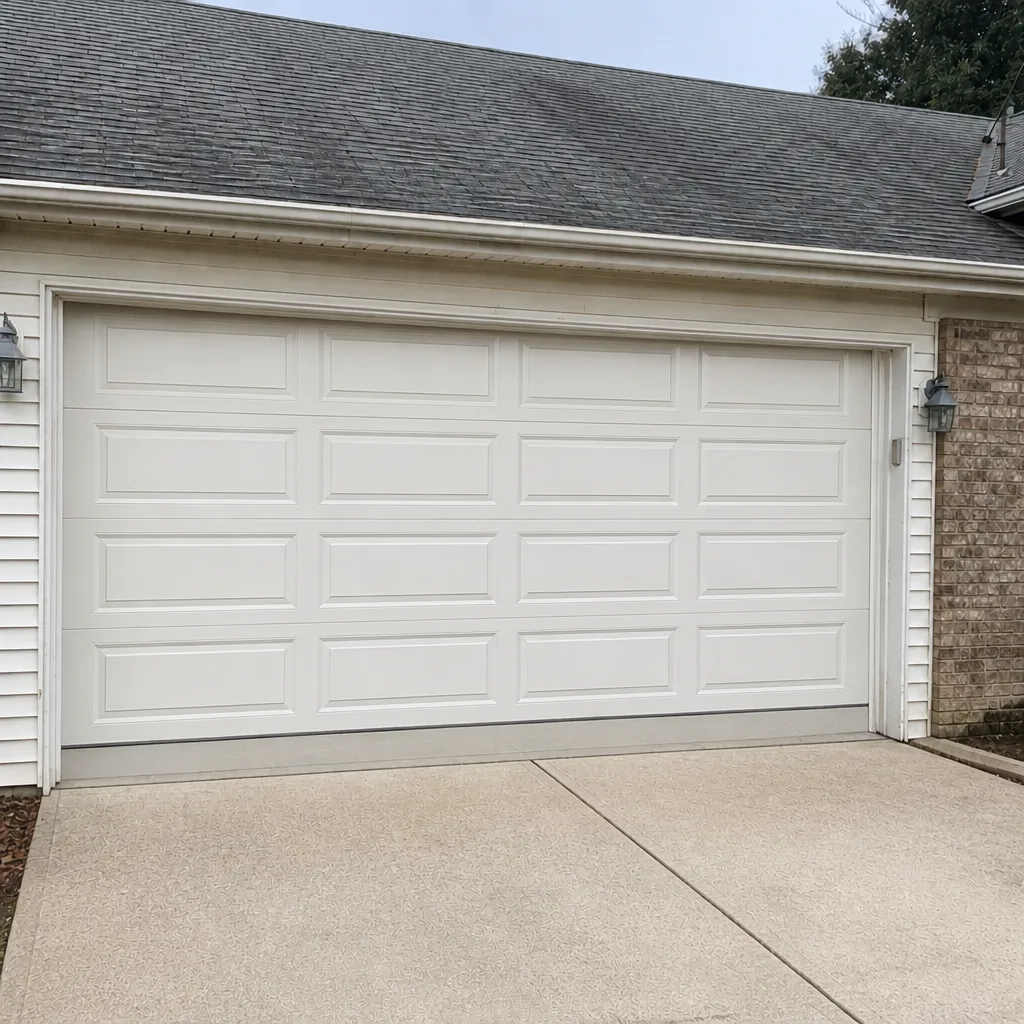 After
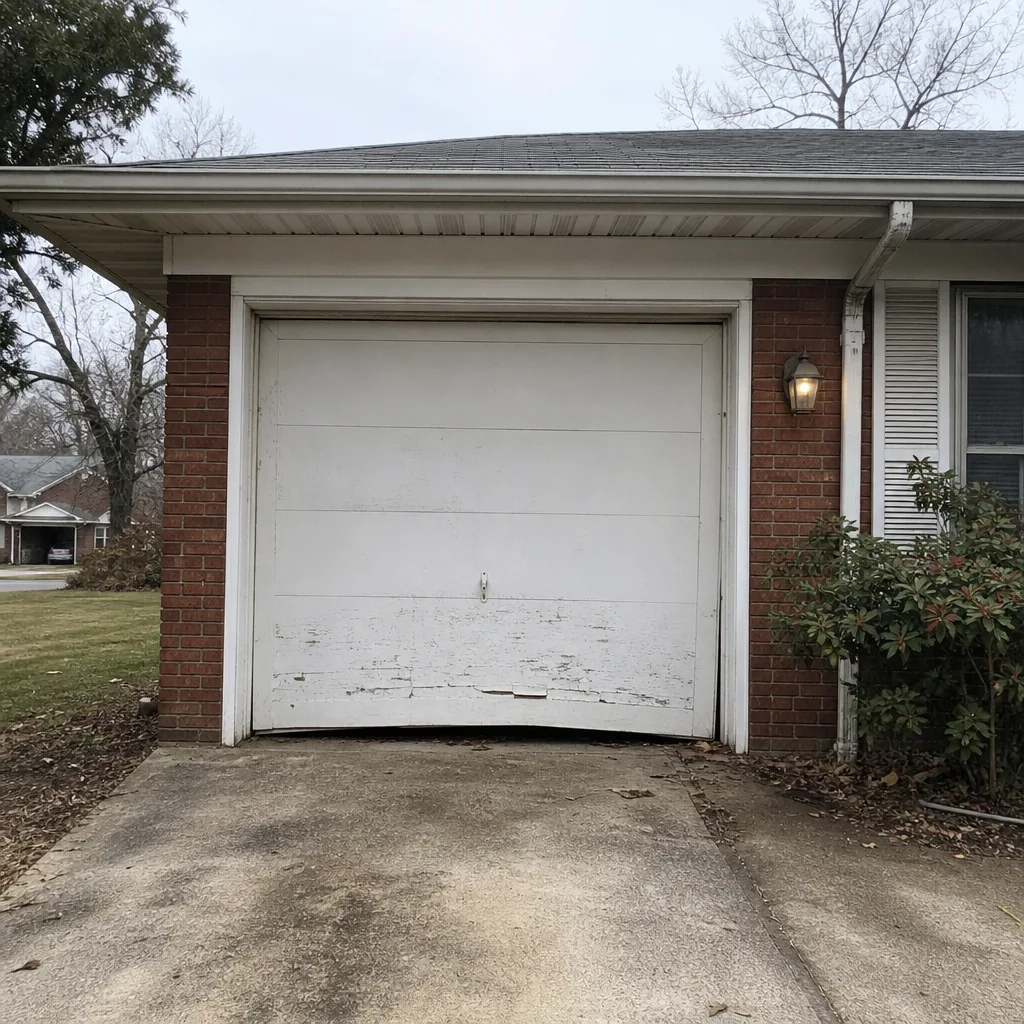 Before
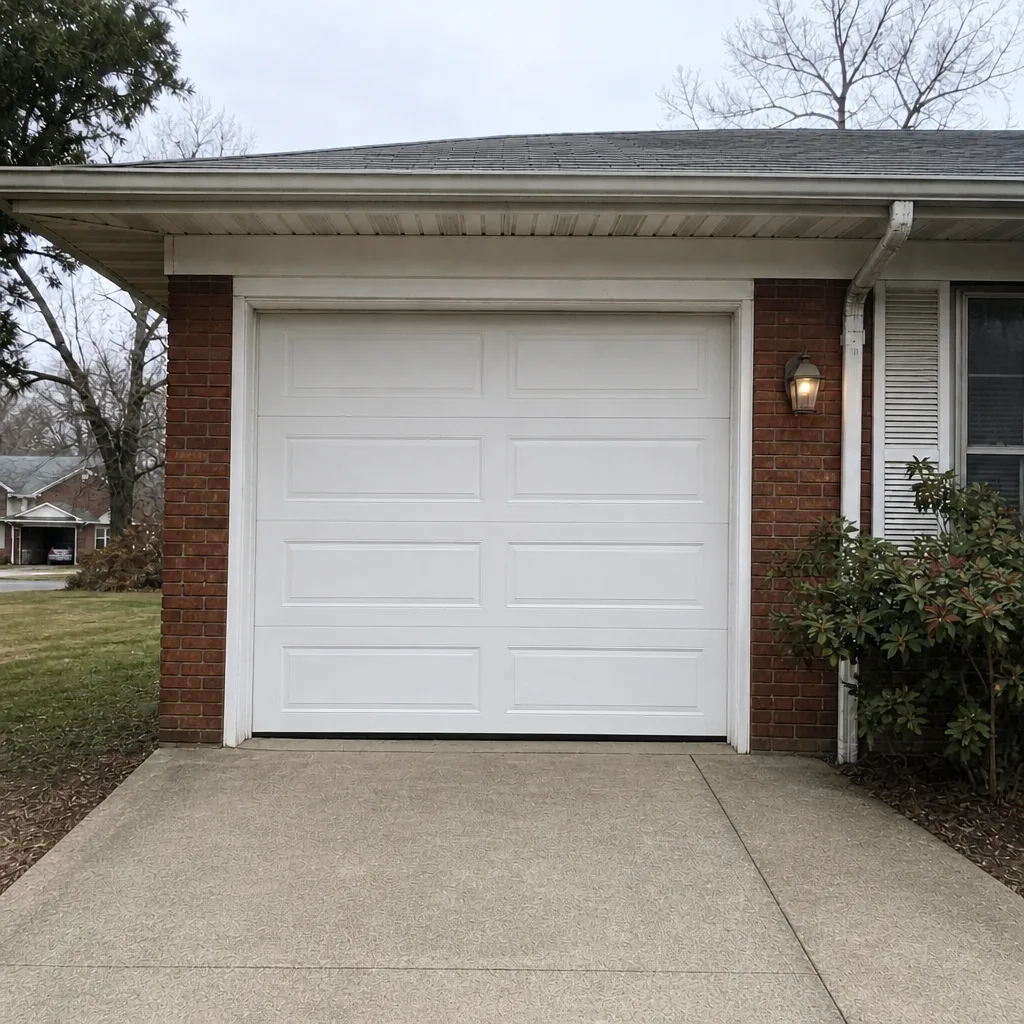 After
When to Call a Professional
Some garage door problems can wait a day. Others can’t. Call a professional the moment the door stops moving safely, comes off its tracks, or stops responding to the opener altogether. A door that’s stuck halfway up is a security gap and a strain on the whole system. A snapped spring means the door’s full weight is now being held by the opener alone, and that can burn out the motor quickly. If the door reverses unexpectedly, or the safety sensors fault repeatedly, that’s a safety issue that needs a trained eye. And if the cable looks frayed or detached, don’t run the door at all until someone qualified has checked it.
Eldridge Garage Door Repair offers free estimates in Lakewood, and our technicians have up to 8 years of experience across the major residential brands, including LiftMaster, Chamberlain, Genie, and Clopay. Call (888) 287-5235. We answer 24/7. Fast dispatch from 7am to 7pm, Sunday through Friday. Whether you need a one-time garage door spring repair or a full new door and opener install, one call covers it.
Frequently Asked Questions
Garage door repair in Lakewood typically ranges from around $150 to $600 depending on the part and the labor involved, and a full door replacement usually runs higher. The written estimate is the price you pay, so ask for an itemized quote that lists parts, labor, and any permit costs separately. Call (888) 287-5235 for an exact quote. Estimates are free.
Yes. New Jersey requires residential home improvement contractors to register with the Division of Consumer Affairs, and garage door repair and installation falls under that requirement. You can verify a contractor’s registration in the state database by name or number in about two minutes. Call (888) 287-5235 if you’d like us to walk you through what to check.
A handyman can handle a small, non-structural adjustment, but the moment the job touches springs, cables, tracks, or opener gears, you want a specialist. The liability difference matters: if an uninsured handyman gets hurt or damages the door, your homeowner’s policy may be the one that covers it. Call (888) 287-5235 to have a specialist diagnose the issue first.
Most common repairs, including spring replacement, opener repair, and roller swaps, are finished in a single visit of one to three hours. If the job requires a special-order part or a full door replacement, expect to schedule the work around delivery. Call (888) 287-5235 for a realistic timeline based on your door.
It shouldn’t if the contractor diagnosed the problem correctly and gave you a written, itemized quote. The written estimate is the price, and any change should come from something you approve in advance, like an added part or a hidden issue. If a contractor re-quotes significantly higher after starting, ask what changed and get it in writing. Call (888) 287-5235 for an estimate up front, before any work begins.
Look at the patterns in the review text, not the star average. Genuine reviews mention specific jobs, parts, and brands like LiftMaster or Clopay, and they’re spread across months. A burst of generic five-star reviews on the same day is the pattern to distrust. Call (888) 287-5235 and ask about the team’s experience before you commit.
The Bottom Line
The biggest hiring mistake isn’t skipping the license check. It’s not asking the questions that separate a specialist from a generalist. Verify the New Jersey registration and insurance, then ask about spring type, opener diagnosis, brand familiarity, repair-versus-replace philosophy, and warranty. Insist on a written, itemized quote and compare the scope, not the bottom line. Read reviews for detail and pattern, not star counts. And when the door matters enough to get it right the first time, call a company that works on garage doors and only garage doors. That’s the whole guide in a paragraph, and it’s the difference between a repair that lasts and one you repeat in six months.
When you’re ready to talk it through, our team is here for the full life of your door, from a broken spring today to a new system later. One call covers it.
Call (888) 287-5235 for a free estimate in Lakewood. We answer 24/7. Fast dispatch from 7am to 7pm, Sunday through Friday. You can also start with Eldridge Garage Door Repair for the full picture of what we handle.
Written by the team at Eldridge Garage Door Repair.